
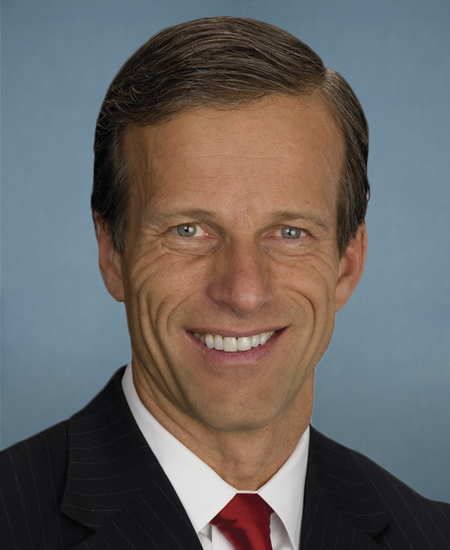
Senate Majority Leader John Thune said Tuesday that Democrats are nowhere near the votes needed to change the filibuster rule to pass voting rights legislation, effectively ending the current push to eliminate the 60-vote threshold for such bills.
The statement comes as some Democratic senators have renewed calls to modify or eliminate the filibuster to advance voting reform measures that have stalled in the chamber. Thune's comments suggest the issue remains deeply divided along party lines with no path forward in the current Senate.
What the Left Is Saying
Progressive Democrats argue the filibuster has become an obstruction to protecting voting rights at a time when they say Republican-led states are restricting ballot access. Senator Jeff Merkley has called the 60-vote requirement an outdated procedural tool that allows a minority to block popular legislation.
Voting rights advocates point to pending legislation like the Freedom to Vote Act and the John Lewis Voting Rights Advancement Act as critical protections that cannot pass under current rules. They argue that fundamental democratic rights should not be subject to supermajority requirements that were not part of the Constitution's original design.
Some moderate Democrats, however, remain opposed to eliminating the filibuster entirely, fearing it could lead to wild policy swings when party control changes. This internal division has prevented Democrats from reaching the simple majority needed to change Senate rules.
What the Right Is Saying
Republicans maintain the filibuster is a vital protection for minority rights in the Senate and prevents one-party rule. Senator Mitch McConnell has repeatedly warned that eliminating the 60-vote threshold would transform the Senate into a simple majoritarian body like the House of Representatives.
Conservative commentators argue that Democrats supported the filibuster when they were in the minority and only seek to eliminate it now for political advantage. They note that the filibuster has been used by both parties to block legislation they oppose.
Thune and other Republican leaders contend that existing voting laws are sufficient and that Democratic voting bills would federalize elections in ways that undermine state authority and election security. They frame the push to eliminate the filibuster as a power grab rather than a principled reform.
What the Numbers Show
The Senate is currently split 51-49 with Democrats holding the majority. Changing Senate rules requires only a simple majority, but at least two Democratic senators—Joe Manchin and Kyrsten Sinema—have publicly opposed eliminating the filibuster in recent years.
According to Senate records, the filibuster has been invoked more frequently in recent decades. In the 2021-2022 Congress, there were 298 cloture votes to end debate, compared to 68 in the 1991-1992 Congress.
A 2022 Pew Research poll found Americans were divided on eliminating the filibuster, with 46% in favor and 43% opposed. Support and opposition largely tracked party affiliation.
The Bottom Line
Thune's statement effectively closes the door on filibuster reform for the current Congress. Without the votes to change the rules, voting rights legislation will continue to face the 60-vote threshold, which Democrats cannot meet with current Republican opposition. The debate over the filibuster will likely resurface in future Congresses as a key procedural battleground.