
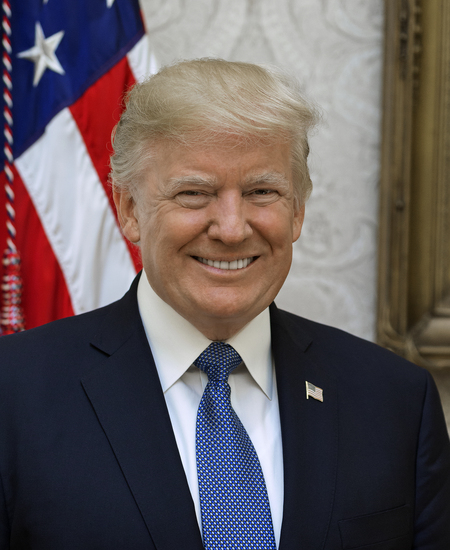
President Donald Trump and Environmental Protection Agency Administrator Lee Zeldin announced Thursday that the federal government will no longer use climate science as the basis for U.S. environmental policy. The move represents a fundamental shift in how the EPA approaches regulation of greenhouse gas emissions and marks a departure from decades of federal climate policy rooted in scientific consensus.
The announcement comes as Trump continues to roll back environmental regulations established during previous administrations. Zeldin, confirmed as EPA administrator in January 2026, has pledged to refocus the agency on what he calls "practical environmental stewardship" rather than "climate alarmism."
What the Left Is Saying
Environmental groups and Democratic lawmakers condemned the announcement as a rejection of established science and a threat to public health. "This is not just bad policy — it's a dangerous abandonment of reality," said Senator Sheldon Whitehouse (D-RI), chair of the Senate Environment Committee. "Climate change is not a matter of opinion. It's measurable, it's happening, and ignoring the science won't make it go away."
The Natural Resources Defense Council called the move "a gift to polluters at the expense of American families." NRDC President Manish Bapna stated, "Removing science from EPA decision-making is like removing math from engineering. The consequences will be catastrophic for communities already facing extreme heat, flooding, and wildfires."
Former EPA Administrator Gina McCarthy, who served under President Obama, said the decision "undermines the legal foundation of the Clean Air Act and puts millions of Americans at risk." She noted that the Supreme Court's 2007 Massachusetts v. EPA decision established that the EPA has authority — and a legal obligation — to regulate greenhouse gases if they endanger public health.
What the Right Is Saying
Trump and Zeldin framed the decision as ending what they describe as regulatory overreach based on uncertain climate models. "For too long, unelected bureaucrats have used questionable science to justify killing American jobs and driving up energy costs," Trump said in prepared remarks. "We're putting American workers first and ending the climate hysteria that's hurt our economy."
Zeldin argued that climate science has been "weaponized" to justify excessive regulation. "The EPA's mission is to protect the environment through sound, practical policy — not to pursue a radical climate agenda based on worst-case scenarios," he stated. The administrator said the agency will focus on "measurable pollution" like air and water quality rather than long-term climate projections.
Conservative think tanks praised the announcement. Myron Ebell of the Competitive Enterprise Institute said, "This restores sanity to environmental policy. Climate models have consistently overpredicted warming, and basing trillion-dollar policy decisions on them was always reckless." The Heritage Foundation called it "a return to the EPA's core mission" and predicted it would reduce regulatory burdens on American businesses.
Republican lawmakers largely supported the move. Senator John Barrasso (R-WY) said, "President Trump is right to end the EPA's war on affordable energy. American families need lower costs, not more climate regulations."
What the Numbers Show
The EPA's authority to regulate greenhouse gases stems from the 2007 Supreme Court ruling in Massachusetts v. EPA, which found 5-4 that carbon dioxide and other greenhouse gases qualify as pollutants under the Clean Air Act. The decision required the EPA to determine whether these gases endanger public health — a finding the agency made in 2009.
According to NASA and NOAA, 2025 was the second-warmest year on record globally, with temperatures 1.35°C above pre-industrial averages. The past decade (2016-2025) represents the 10 warmest years in recorded history. Atmospheric CO2 concentrations reached 425 parts per million in 2025, up from 280 ppm in pre-industrial times.
The U.S. is the world's second-largest emitter of greenhouse gases, producing approximately 5.4 billion metric tons of CO2 equivalent in 2024. Under the Paris Agreement, the U.S. had committed to reducing emissions 50-52% below 2005 levels by 2030, though Trump withdrew from the agreement during his previous term and has signaled he will do so again.
A 2023 Government Accountability Office report estimated that climate-related disasters cost the federal government $617 billion between 2005 and 2022, including disaster relief, crop insurance, and infrastructure repair.
The Bottom Line
The announcement sets up a likely legal battle over the EPA's authority and obligations under the Clean Air Act. Environmental groups have already signaled plans to sue, arguing that the agency cannot simply ignore its own endangerment findings without new scientific evidence. The decision also complicates U.S. participation in international climate negotiations and may accelerate the divergence between federal and state climate policies, with states like California and New York maintaining their own emissions regulations. Energy markets will be watching to see whether the policy shift affects investment in renewable energy and fossil fuel infrastructure.