
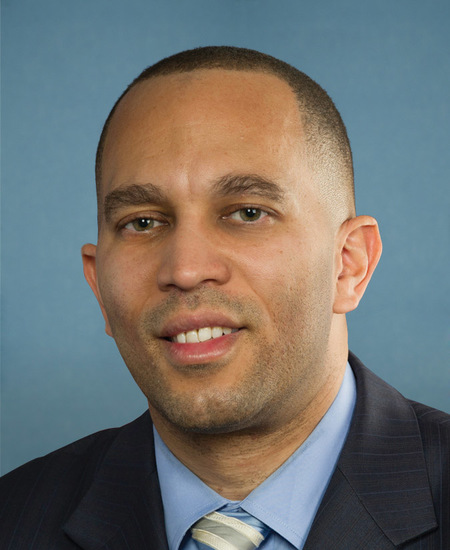
House Minority Leader Hakeem Jeffries on Sunday declined to commit to blocking additional funding for the war in Iran, saying President Donald Trump has so far failed to justify the military operation but that Democrats would "cross that bridge when we get to it."
Jeffries appeared on NBC News' "Meet the Press" and was asked whether House Democrats would move to block a supplemental funding request if the White House were to ask for more money for the military. The New York Democrat responded that the administration has "failed to make its case ... for this war of choice in the Middle East," and unless Trump provides a "compelling rationale," he would "have a difficult case to make on Capitol Hill."
What the Left Is Saying
Progressive Democrats and their allies have largely been critical of Trump's decision to launch military operations in Iran, with Jeffries leading the charge in demanding more transparency from the administration. The minority leader has echoed concerns from progressive lawmakers that the president has not adequately explained the legal basis or strategic rationale for the strikes.
"The American people don't want to see billions of dollars being spent to bomb Iran and the Middle East, while at the same period of time, my Republican colleagues and this president are unwilling to spend a dime to lower their grocery bills," Jeffries said on Sunday, framing the debate as one about priorities.
Sen. Chris Coons, D-Del., said after a classified Senate briefing on the war that he expects the Pentagon will come forward with a supplemental funding request. While indicating he would support additional funding for troops, Coons said he wants an open hearing so the American people can get answers about "the failures in planning that led to some of the challenges, the losses and mistakes in this war so far."
What the Right Is Saying
Republicans have defended Trump's authority to conduct military operations in Iran and argue that supporting the troops means supporting the funding necessary to carry out their mission. GOP lawmakers have largely backed the administration's position that the strikes were necessary for national security.
Last week, both chambers of Congress failed to pass a war powers resolution that would have restricted military action in Iran. Most Democrats and two Republicans voted in favor of the resolution, meaning most Republicans opposed it.
Senate Republicans have indicated they are willing to consider supplemental funding for the war effort, with several senators signaling support for additional resources after receiving classified briefings. The Trump administration has not formally requested supplemental funding but has floated invoking the Defense Production Act to compel American companies to boost munitions production.
What the Numbers Show
Congress last year approved a $900 billion defense spending bill as part of routine annual budget appropriations, which Trump signed into law in December. That figure represents the baseline defense funding for fiscal year 2026.
The war powers resolution that failed to pass last week needed a simple majority to advance in the Senate. Most Democrats and two Republicans supported it, falling short of the votes needed to restrict the president's military authority.
The supplemental funding request that lawmakers expect from the Pentagon has not yet been formally submitted, meaning the precise amount of additional funding under consideration remains unclear.
The Bottom Line
Jeffries' refusal to commit to blocking supplemental Iran war funding reflects the delicate position Democrats find themselves in as they balance their opposition to the war with support for American troops. While progressive lawmakers have been vocal in demanding answers from the administration, key Senate Democrats like Coons have indicated openness to supporting additional funding if it ensures troop safety.
What remains unclear is whether the Trump administration will formally request supplemental funding and, if so, what conditions Democrats will demand in exchange for their support. Jeffries has set the bar high, saying Trump must provide a compelling rationale that he believes will be difficult to meet. The coming weeks will test whether Congress can exert meaningful oversight over a conflict that has already seen significant military action.
The DHS funding standoff remains separate but related, with Jeffries arguing Republicans control all branches and should bear responsibility for the partial government shutdown that began in February.