
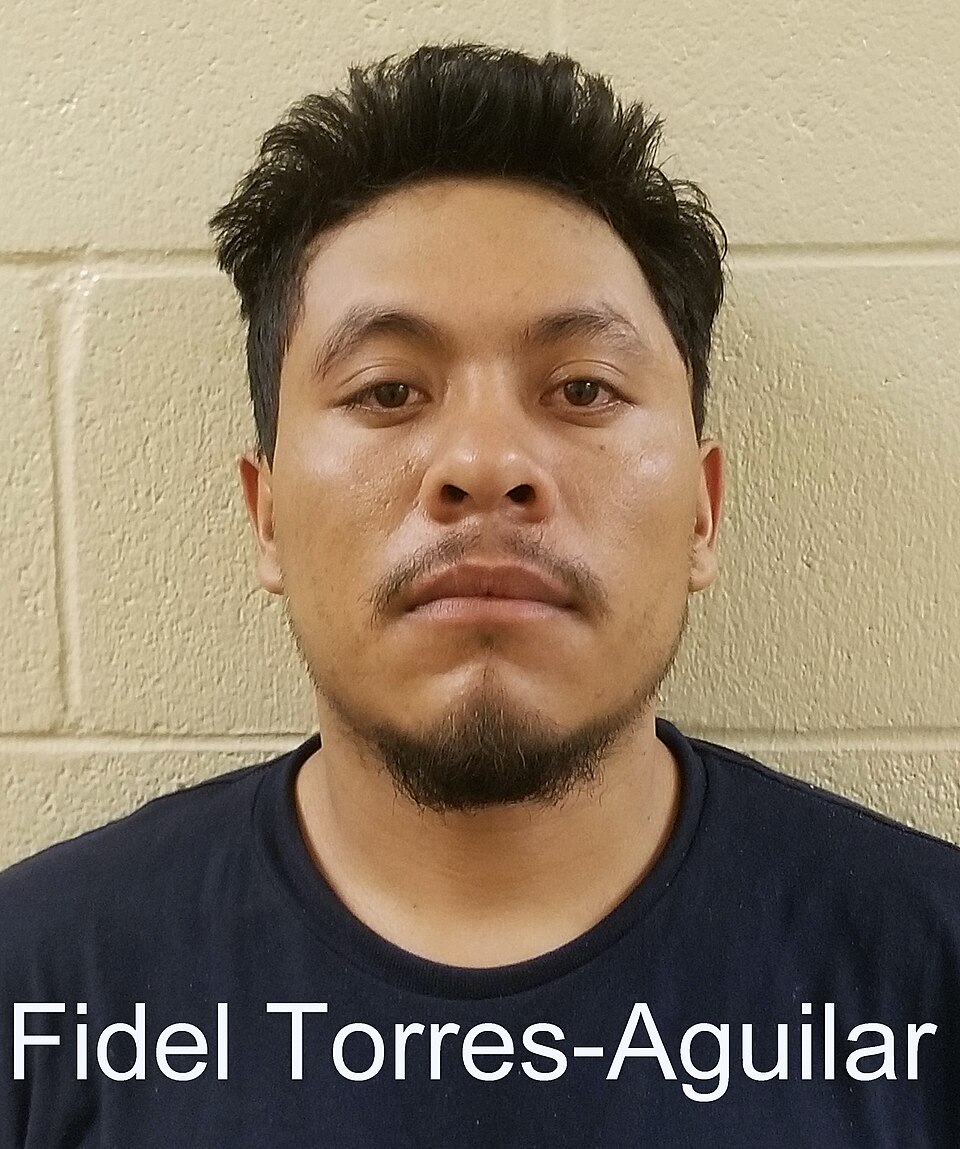
The Department of Homeland Security confirmed that U.S. Border Patrol agents from the San Diego Sector arrested two Mexican fugitives in California with active warrants for homicide and lewd acts upon a child.
In the first operation on Feb. 26, agents conducted surveillance targeting Silvia Del Rosario Torres-Castro, a Mexican national wanted in Mexico for homicide. Agents arrested her without incident in Anaheim and turned her over to Mexico's Fiscalía General de la República. Officials said she entered the U.S. illegally in December 2023 under the Biden administration in the Imperial Beach Border Patrol Station's Area of Responsibility.
In a separate operation on March 6, agents targeted Salvador Suazo-Garcia, a Mexican national wanted in Mexico for lewd and lascivious acts upon a child. Agents arrested him without incident in Lemon Grove, California, processed him administratively and turned him over to Mexico's authorities. Though Suazo-Garcia entered the U.S. legally in May 2021, his visa was revoked based on alleged crimes in Mexico.
What the Left Is Saying
Immigration advocates and some Democratic lawmakers have long argued that focusing on individual criminal cases obscures the broader reality of immigration patterns. Progressive organizations, including the American Immigration Council, have noted that immigrants as a population are statistically less likely to commit crimes than native-born Americans. Critics of the DHS statement argue that conflating immigration status with criminality creates misleading narratives about public safety.
Some Democrats have also pushed back on characterization of immigrants without U.S. criminal records as "non-criminal," noting that the term conflates legal status with criminal behavior. Congressional Progressive Caucus members have advocated for comprehensive immigration reform that addresses root causes of migration rather than enforcement-focused approaches.
What the Right Is Saying
DHS Acting Assistant Secretary Lauren Bis issued a sharp statement criticizing the Biden administration's immigration policies. "Thanks to the Biden administration, these dangerous criminal illegal aliens were allowed to roam American streets and make our communities less safe," Bis wrote. "These are the types of illegal aliens the media categorizes as 'non-criminal' illegal aliens because they lack a rap sheet in the U.S."
Republicans have long argued that porous borders allow criminals to enter the country. House Judiciary Committee Republicans have held hearings on so-called "catch and release" policies, arguing that asylum seekers with pending cases should remain detained. The arrests of the two fugitives have reinforced GOP calls for stricter border enforcement and ending what they characterize as lenient immigration policies.
What the Numbers Show
DHS officials said that nearly 70% of illegal immigrants ICE has arrested across the country have criminal convictions or pending criminal charges in the U.S. This statistic, provided by Bis, does not account for those wanted for violent crimes in their home countries, human rights abusers, gang members or suspected terrorists, according to the statement.
The two fugitives were both turned over to Mexico's Fiscalía General de la República to face justice in their home country. Torres-Castro was arrested in Orange County, while Suazo-Garcia was arrested in San Diego County.
The Bottom Line
The arrests highlight the ongoing challenge of coordinating with Mexican authorities on criminal suspects who may have crossed borders. DHS has emphasized that individuals with outstanding warrants in their home countries can be apprehended during immigration enforcement operations, even when they have no U.S. criminal record.
The case also illustrates the tension in how immigration enforcement is discussed. Bis's statement specifically criticized what she called media characterization of immigrants without U.S. rap sheets as "non-criminal," arguing that crimes committed abroad should factor into how immigration enforcement is discussed publicly. What to watch: whether future coordination between U.S. and Mexican law enforcement leads to similar arrests, and how congressional debates over border funding address these cases.