
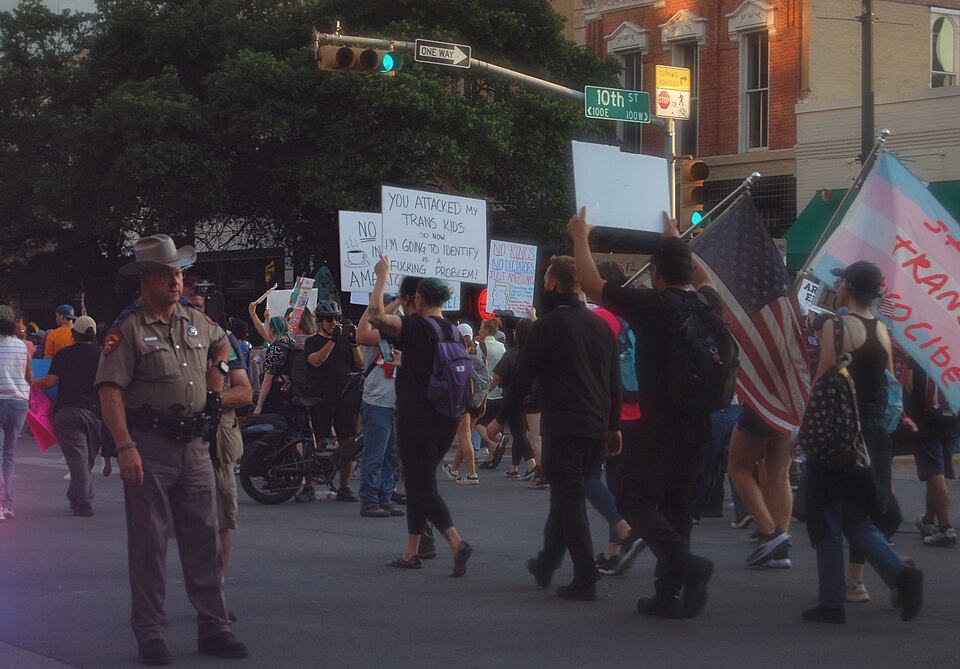
"No Kings," a decentralized protest movement that crystallized in opposition to President Donald Trump's second term, will hold over 3,500 events across the country on Saturday, according to Sarah Parker, an organizer for one of the events in Minneapolis, Minnesota.
The protests mark the most recent development for the amorphous group, which first burst onto the scene through "No Kings Day" in June 2025. The movement touts opposition to Trump's actions on Iran, immigration enforcement, and what its website describes as "masked secret police terrorizing our communities" and "attacks on our freedom of speech, our civil rights, our freedom to vote."
What the Right Is Saying
Critics question whether "No Kings" is as leaderless as it claims. The movement is not registered as a non-profit or business, which limits transparency requirements and makes its funding sources unclear. Its internal "March 28 Toolkit" provides organizers with detailed guidance on recruiting speakers, delegating roles, registering events, and using branded materials—raising questions about the degree of centralization behind the decentralized facade.
The toolkit also includes a "host hotline" with a Maryland area code, which critics note suggests professional coordination. Additionally, the movement's partnership with 50501—another decentralized organization whose name stands for "50 states, 50 capitols, one day"—raises questions about the relationship between these groups and their actual organizational structure.
Conservative observers have noted that while the movement presents itself as spontaneous, its documented logistics framework and coordinated messaging suggest a higher degree of organization than typically associated with truly leaderless grassroots movements.
What the Left Is Saying
Progressive supporters of the movement, including organizer Sarah Parker, frame "No Kings" as an organic, people-powered uprising. "I think it's important to be out in the streets at this moment in time to save our country," Parker said. "The events will be overwhelmingly peaceful and there are going to be millions of Americans from different affiliations, different ages and different ethnic backgrounds coming together to be in community."
Parker emphasized the movement's grassroots nature, noting that local hosts are volunteers who have stepped up across the country. "We have hundreds of events in rural and deep-red states," she said, describing the scale as evidence of organic growth rather than top-down coordination. The movement's website claims its June 2025 event inspired "a nationwide uprising 14 times larger than both of Trump's inaugurations combined."
The movement's message is directed at elected officials across the political spectrum. "I think it's for any elected official that is not listening to their constituents again," Parker said. "It should be a message for any, any elected officials, regardless of their political affiliation."
What the Numbers Show
"No Kings" claims its June 2025 event was "14 times larger than both of Trump's inaugurations combined," though independent verification of attendance figures is not available. The movement plans 3,500 events for Saturday's action, with organizational activity concentrated in urban centers nationwide. Parker indicated that Minneapolis will serve as a "flagship" location for the protests.
The movement operates without financial reporting requirements because it is not registered as a non-profit or business entity. The 50501 movement, which partners with "No Kings," is similarly unregistered.
The Bottom Line
"No Kings" presents itself as a leaderless, organic movement opposing the Trump administration, and Saturday's protests will test whether that narrative matches reality. The internal toolkit and Maryland hotline suggest professional coordination, even as organizers maintain the movement operates without formal structure. With 3,500 events planned nationwide, the scale of Saturday's protests will provide measurable data on the movement's reach. The tension between its self-described decentralized nature and documented organizational infrastructure is likely to remain a point of scrutiny as the movement scales.