
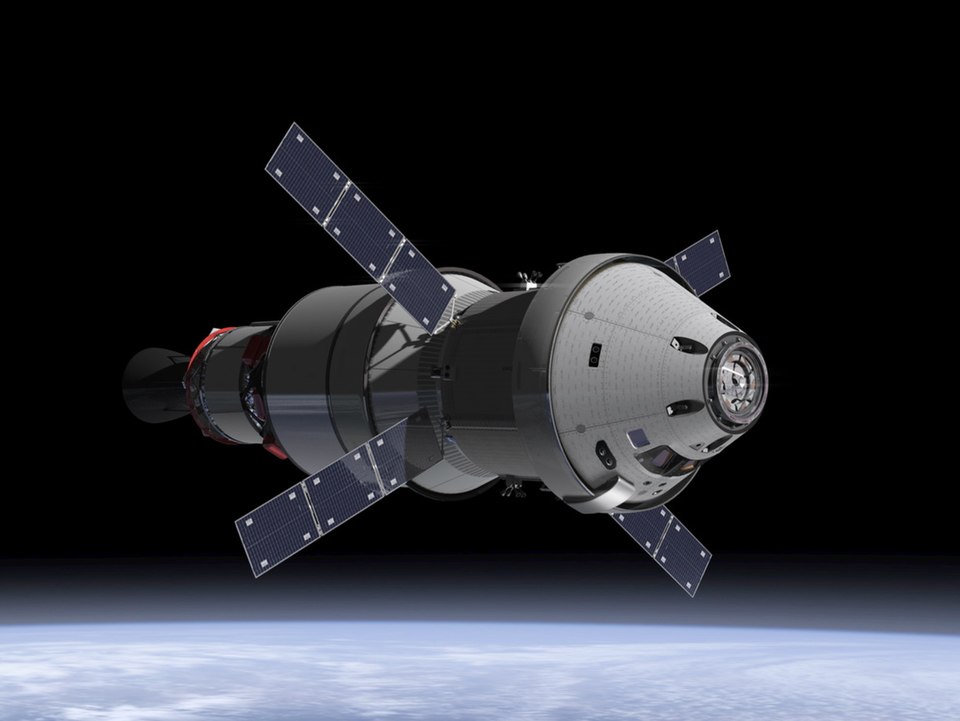
For the first time in more than 50 years, NASA is preparing to send astronauts back toward the Moon with the Artemis II mission, scheduled to launch April 1 at 6:24 p.m. EST from Florida's Kennedy Space Center.
The four-member crew will embark on a ten-day journey around the Moon, becoming the first humans to travel to the lunar vicinity since Apollo 17 in 1972. The mission is designed as a test flight for NASA's Orion deep space capsule and aims to pave the way for future moon landings.
The crew consists of Commander Reid Wiseman, a former Navy test pilot with 165 days aboard the International Space Station; Pilot Victor Glover, a Navy aviator who flew on the Crew-1 Dragon mission; Mission Specialist Christina Koch, who holds the record for the longest continuous spaceflight by a woman at 328 days; and Mission Specialist Jeremy Hansen, a Canadian astronaut making his first spaceflight.
What the Left Is Saying
Progressive advocates and Democratic supporters of NASA's Artemis program emphasize its contributions to scientific discovery, international cooperation, and inspiration for future generations. Supporters point to the mission's potential for advancing climate research, as Orion's systems will test technologies useful for understanding Earth's atmosphere from space.
The inclusion of Jeremy Hansen as the first Canadian to travel beyond Earth orbit has been highlighted by supporters as a model of international partnership in space exploration. Senator John Hickenlooper and other Democrats have argued that Artemis represents American leadership in fostering peaceful international cooperation in the final frontier.
Progressive space policy advocates note that Christina Koch's participation as potentially the first woman to travel to the Moon represents a historic milestone for gender equality in STEM fields. The mission's emphasis on scientific research, including the 300+ experiments conducted by Wiseman during his ISS tenure, aligns with Democratic priorities for investing in scientific advancement.
What the Right Is Saying
Conservative supporters of the Artemis program emphasize its role in restoring American prestige and leadership in space exploration. House Science Committee Republicans have praised the mission as a demonstration of American technological superiority, noting that it represents the first time since the Apollo era that the United States is leading human spaceflight beyond low-Earth orbit.
Former President Donald Trump and other Republican leaders have pointed to Artemis as evidence of American innovation, with the private sector partnerships through companies like SpaceX playing an increasingly central role. The 5.7-million-pound Space Launch System rocket has been cited by supporters as a testament to American engineering capabilities.
National security advocates within the Republican caucus have emphasized the strategic importance of maintaining U.S. dominance in space. The mission's testing of Orion's life support systems and communication capabilities is viewed by supporters as essential for future deep space operations that could have defense applications.
What the Numbers Show
The Artemis II mission will travel approximately 252,000 miles from Earth during its ten-day journey. This distance exceeds the previous record of roughly 248,000 miles set by Apollo 13 in 1970 by about 4,000 miles. The crew will pass between 4,000 and 6,000 miles above the Moon's surface during their loop around the lunar far side.
The Orion spacecraft will reach speeds of approximately five miles per second after reaching orbit in about eight minutes. The crew will spend roughly 24 hours conducting systems checks in Earth orbit before performing a translunar injection burn to escape Earth's gravitational pull. Communication with mission control will be interrupted for 30 to 50 minutes while the spacecraft is on the far side of the Moon.
Commander Reid Wiseman previously spent 165 days aboard the International Space Station and conducted more than 300 experiments, setting a record of 82 research hours in a single week. Christina Koch holds the record for the longest continuous spaceflight by a woman at 328 days. Victor Glover will become the first Black astronaut to travel around the Moon if the mission proceeds as planned.
Artemis I, launched in 2022, was an unmanned test flight that revealed unexpected wear to the heat shield during reentry. NASA has since conducted additional testing to address this issue before the crewed mission.
The Bottom Line
The Artemis II mission represents a significant milestone in human space exploration, marking the first crewed journey to lunar vicinity in over five decades. If successful, it will set new distance records for human spaceflight and test critical systems needed for eventual moon landings.
The mission faces several key variables. Commander Wiseman has emphasized that the crew is prepared for multiple scenarios, including potentially not completing a full lunar loop if systems checks reveal problems. The success of Orion's life support systems, which must provide breathable air, water, and basic necessities for ten days, will be a primary objective.
The April 10 splashdown in the Pacific Ocean will mark the culmination of what NASA describes as a test mission designed to validate capabilities for future deep space exploration. The outcomes will inform the planning for Artemis III, which aims to achieve the first lunar landing since 1972.