
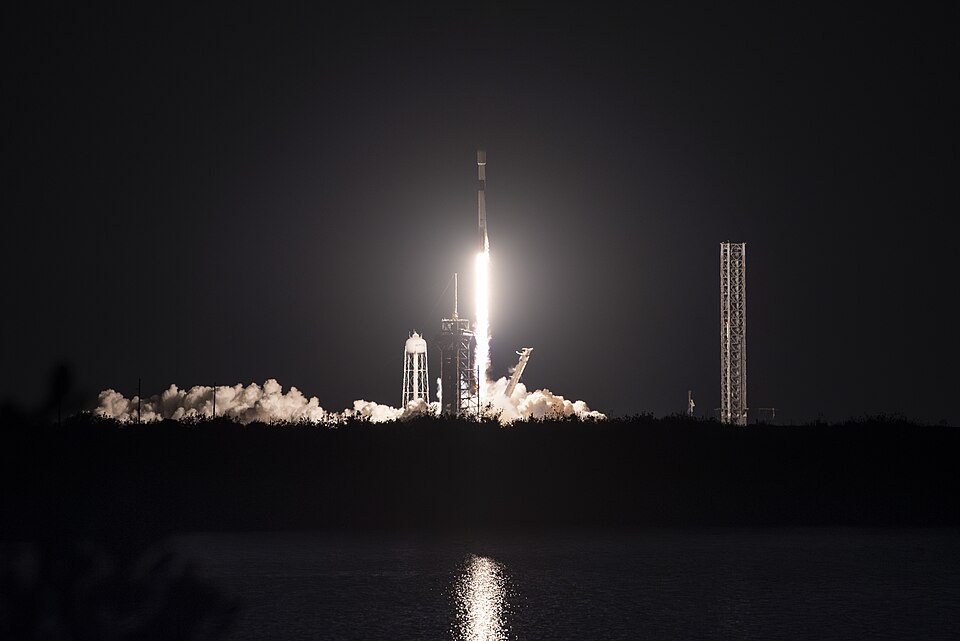
NASA's Artemis II mission successfully launched early Friday, sending four astronauts on a historic flight around the Moon in what marks the first human deep-space voyage since the Apollo program ended more than five decades ago.
The Orion spacecraft, carrying NASA astronauts Reid Wiseman and Victor Glover alongside CSA astronaut Jeremy Hansen and ESA astronaut Andreas Mogensen, lifted off from Kennedy Space Center on a mission designed to test key systems ahead of planned lunar landing missions. The nine-day flight will orbit the Moon at approximately 6,700 miles above the lunar surface before returning to Earth.
What the Left Is Saying
Progressive Democrats and labor advocates have praised Artemis II as evidence that sustained federal investment in space exploration yields transformative results. Senator Tammy Duckworth of Illinois, a longtime advocate for NASA funding, called the launch 'a testament to what we can achieve when we commit to scientific discovery and American leadership in space.'
Environmental groups and some progressive economists have also highlighted the mission as a model for federal infrastructure investment. The Planetary Society noted that Artemis represents 'the kind of long-term, bipartisan scientific endeavor that brings out the best in American innovation.' Organized labor, particularly unions representing aerospace workers, have pointed to Artemis II as proof that federal contracts can support high-quality manufacturing jobs across the country.
What the Right Is Saying
Conservative Republicans have largely welcomed the Artemis II launch while maintaining ongoing debates about federal spending on space exploration. Senator Ron Johnson of Wisconsin, who has questioned NASA's budget increases in past appropriations cycles, said the mission demonstrates 'what American ingenuity can accomplish when we trust our space professionals rather than burdening them with excessive regulation.'
Fiscal conservatives in the House have continued to push for greater oversight of NASA's spending, with some members arguing that commercial space partnerships should bear more of the program's costs. The Heritage Foundation has argued that while Artemis II represents a 'remarkable achievement,' taxpayers deserve greater transparency about the program's $4.2 billion annual budget. Freedom Caucus members have noted their support for the mission while emphasizing the need to ensure NASA's expenditures align with core national security and scientific objectives.
What the Numbers Show
The Artemis program has received approximately $4.2 billion in annual funding from Congress, with total expenditures since 2017 exceeding $30 billion. The Artemis II mission itself carries an estimated price tag of $1.2 billion, including launch services, spacecraft operations, and mission support.
The four-person crew represents the first time since 1972 that humans will travel beyond low-Earth orbit. The mission launches 53 years after Apollo 17, the last crewed lunar flight. NASA reports that Artemis II has generated approximately 14,000 direct jobs across 42 states, with economic impact studies suggesting the program supports an additional 28,000 indirect positions in the aerospace supply chain.
Public polling from Pew Research Center indicates 72% of Americans believe NASA is essential to U.S. leadership in science and technology, while 58%支持 increased federal funding for lunar exploration programs.
The Bottom Line
Artemis II represents both a culmination of years of engineering development and the beginning of an ambitious phase of lunar exploration intended to establish sustained human presence on the Moon. The mission's success will likely intensify debates about NASA's budget trajectory as the agency prepares for Artemis III, the planned lunar landing mission currently scheduled for 2027 or later.
Congressional appropriators will closely examine the program's cost performance as NASA transitions from development to operational missions. The balance between government-funded exploration and commercial space partnerships remains a key point of policy discussion heading into the next budget cycle. What to watch: the crew's health metrics during the deep-space transit and NASA's decisions on Artemis III timeline and landing site selection.