
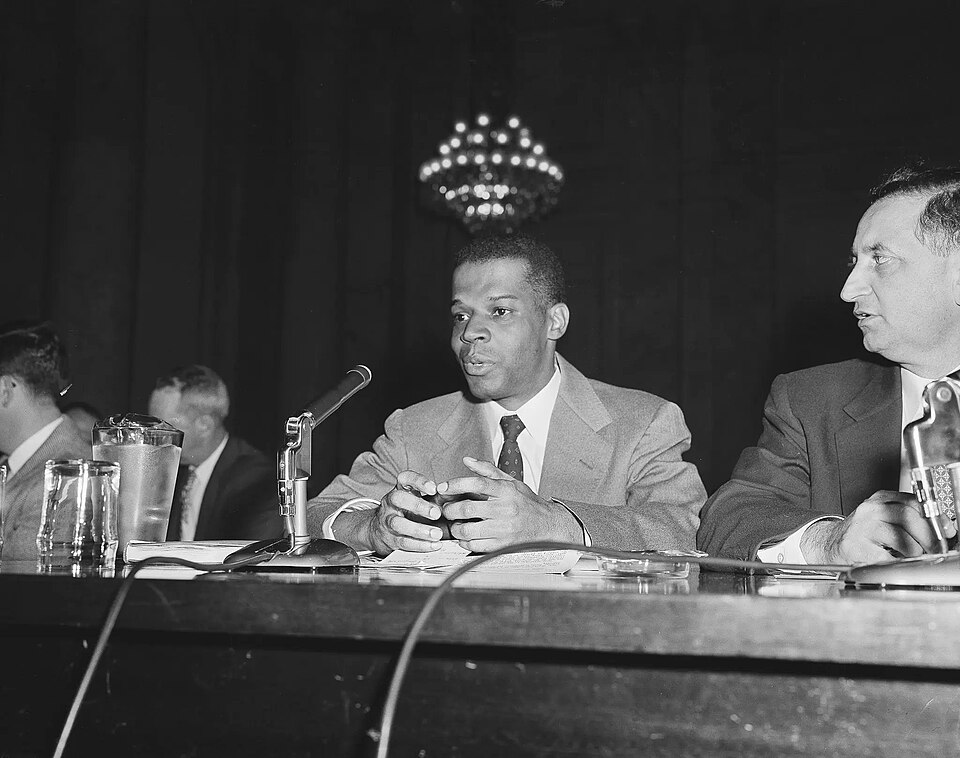
Rep. Bennie Thompson (D-Miss.) said Saturday that likely redistricting efforts following the Supreme Court's ruling against a second Black majority congressional district leave Democrats with significant challenges ahead. The court's 6-3 decision struck down Louisiana's new map as an unconstitutional racial gerrymander, weakening a core provision of the 1965 Voting Rights Act.
Mississippi Gov. Tate Reeves (R) said last week he would call for a special session to consider redrawing the state's congressional map 21 days after the high court issued its ruling on Wednesday. The decision could significantly impact how Southern states draw their congressional districts going forward.
What the Left Is Saying
Thompson told CNN's Victor Blackwell that Black Mississippians, who comprise 38 percent of the state's population, should have at least one House representative guaranteed under fair redistricting principles. "What you see is exactly what I've been talking about," he said. "Given an opportunity left to themselves without any guardrails, white Republican elected officials would wipe out every opportunity for Black people to be elected."
Thompson emphasized his personal stake in the Voting Rights Act's survival. "I would not be an elected official had it not been for the Voting Rights Act," he said, adding that he also would not have been a registered voter without its protections. He argued the Supreme Court ruling "has moved us back over 60 years" and vowed to continue fighting.
Democrats across the South have denounced the ruling as a return to Jim Crow-era restrictions. They warn it could enable Republicans to pick up as many as 19 new GOP-leaning House seats in Mississippi, Alabama, Tennessee, and South Carolina. Thompson's own seat is among those potentially jeopardized by the decision.
What the Right Is Saying
Southern Republican lawmakers have welcomed the court's action as a check on what they characterize as excessive racial sorting in redistricting. Sens. Tommy Tuberville (Ala.) and Marsha Blackburn (Tenn.) have called on their respective state officials to ensure Republican House victories under the new legal framework.
Mississippi Gov. Reeves has framed his planned special session as an opportunity to draw maps that comply with the Supreme Court's ruling while maintaining electoral integrity. Louisiana Gov. Jeff Landry (R) suspended his state's primary and runoff elections, previously scheduled for just over two weeks away, saying the court's decision bars the state "from carrying out congressional elections under the current map."
"This executive order ensures we uphold the rule of law while giving the Legislature the time it needs to pass a fair and lawful congressional map," Landry said in announcing the suspension. Republican officials argue they are following judicial guidance rather than seeking to suppress minority voting power.
What the Numbers Show
The Supreme Court's 6-3 ruling specifically targeted Section 2 of the Voting Rights Act, which prevents election practices that deny equal access to the political process based on race. The decision marks a significant shift in how courts will evaluate racial considerations in redistricting.
Black residents comprise approximately 38 percent of Mississippi's population, making it one of several Southern states where minority representation could be affected by revised maps. Cook Political Report and Sabato's Crystal Ball have identified Democratic seats in Mississippi, Alabama, Tennessee, and South Carolina as potentially vulnerable under new district configurations.
Louisiana had been operating under a map that created a second Black-majority district following the court's earlier Allen v. Milligan decision. That map is now invalid under Wednesday's ruling, which found it constituted an unconstitutional racial gerrymander despite its compliance with the previous VRA standard.
The Bottom Line
The Supreme Court's ruling sets a new legal standard for evaluating racial considerations in congressional redistricting, giving states more flexibility to draw maps without explicitly prioritizing Black representation. Governors in Mississippi and Louisiana have moved quickly to initiate map redrawing processes, while Democratic officials warn of significant losses in minority electoral power.
Thompson's warning reflects broader Democratic concerns that the decision will reverse decades of progress in Black political representation across the South. Republicans counter that the ruling simply restores traditional districting principles without targeting any particular group. Both sides are preparing for extended legal and political battles as states begin their redistricting processes under the new framework.