
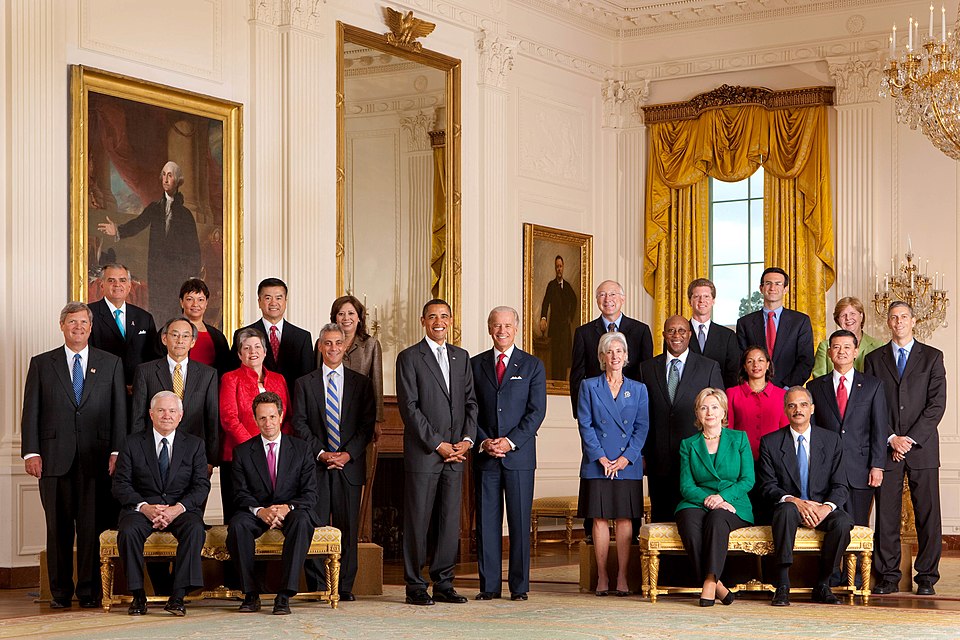
Rahm Emanuel, the former Democratic congressman, White House chief of staff under President Barack Obama, Chicago mayor and U.S. ambassador to Japan, is testing the waters for a potential 2028 presidential bid with an intensive three-day swing through New Hampshire that included more than 117 miles of cycling across the Granite State.
The trip from Portsmouth on the coast to Hanover near the Vermont border was dubbed the "Spin-Free Tour," a reference Emanuel made to his blunt political style, which he frames as an asset for Democrats seeking to recover from devastating losses in the 2024 election cycle. The 66-year-old politician has not formally announced his candidacy but has released a flurry of policy proposals and maintained an active presence on podcasts and social media.
"Tough times require a tough leader," Emanuel told The Associated Press during a break at a coffee shop in Warner, New Hampshire. "I don't think this is just about learning the words to 'Kumbaya.'"
What the Left Is Saying
Progressive Democrats have offered mixed reactions to Emanuel's early campaign outreach. Some within the party view his policy proposals as substantive, including his advocacy for social media bans targeting children and prediction markets as political forecasting tools.
However, critics from the left have taken issue with Emanuel's public criticism of Democratic positions on transgender rights. On an episode of Katie Couric's podcast posted last week, Emanuel said: "We did things that were really ridiculous. Rather than worry about classroom excellence, we were worried about bathroom and locker room access."
Younger voters and progressive activists have expressed concern that such framing distances the party from civil rights advocacy. The ongoing war in Gaza has also created new divisions within Democratic ranks, an issue Emanuel plans to address during a trip to Israel next month.
Some Democrats point out that despite his extensive resume, Emanuel faces significant obstacles in connecting with primary voters who may prefer candidates untethered to past party leadership. "A campaign for what?" was the response from one New Hampshire woman when informed of Emanuel's potential candidacy after encountering him at a coffee shop.
What the Right Is Saying
Conservative commentators and Republican strategists have noted Emanuel's positioning as a deliberate strategy to occupy the political center, drawing comparisons to Bill Clinton's successful third-way Democratic approach. His willingness to criticize his own party's cultural positions has drawn acknowledgment from some corners.
"Some of our Democratic leaders haven't been strong enough," said Don Daley, a 60-year-old state employee from Concord who attended one of Emanuel's house party events. While acknowledging that Emanuel "probably steps on a few toes," Daley added: "But I think that's what we need right now."
Emanuel's emphasis on kitchen-table economic issues and his critique of the tax system as burdensome to the middle class have resonated with some suburban voters who drifted toward Republicans in recent cycles. His mandatory retirement age proposal of 75 for public officials would, if applied retroactively, prevent him from seeking a second term if elected president.
What the Numbers Show
Emanuel's New Hampshire tour covered approximately 117 miles (188 kilometers) over three days, including one notably hilly 20-mile stretch with an elevation gain exceeding 1,300 feet. He stopped for water and snacks every 10 to 15 miles during the ride.
At age 66, Emanuel would be among the older candidates in a Democratic primary field that is expected to include younger officeholders currently serving as governors and senators. His policy rollout has included proposals on social media restrictions for minors, prediction markets for political forecasting, and term limits through mandatory retirement ages.
Recent competitive races have shown mixed signals for moderate candidates. Emanuel cited Rebecca Bennett's win in a crowded New Jersey Democratic House primary and Josh Turek's nomination as the new Democratic Senate candidate in Iowa as evidence that "radical moderates" are prevailing in party contests.
The Bottom Line
Emanuel's New Hampshire visit represents an early but deliberate effort to build name recognition and test message resonance ahead of what would be a crowded 2028 Democratic primary. His strategy combines physical endurance demonstrations, policy specificity, and ideological positioning that deliberately distances himself from progressive cultural positions.
The former Chicago mayor faces substantial challenges: limited public recognition outside political circles, competition from better-known potential candidates who hold current offices, and questions about whether his moderate messaging can differentiate him sufficiently in a primary environment where progressive voters remain influential. His candidacies for higher office will likely depend on whether he can convert early retail politics into sustained momentum through the 2026 midterm cycle and beyond.