
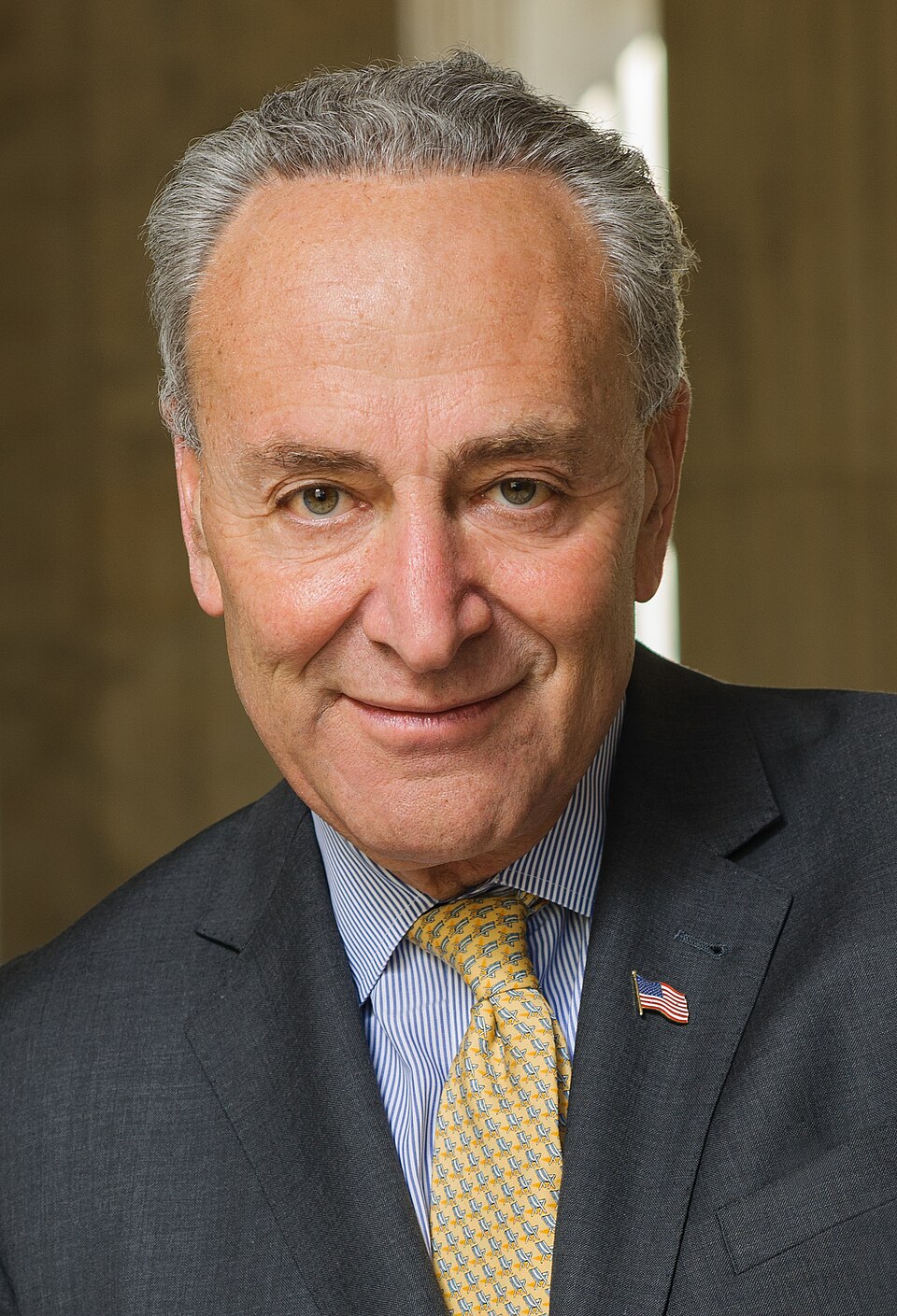
Former "Meet the Press" host Chuck Todd said Thursday that Senate Democratic Leader Chuck Schumer of New York and House Minority Leader Hakeem Jeffries of New York would struggle to win a primary in New York City amid the rise of democratic socialist candidates backed by Mayor Zohran Mamdani.
Two candidates endorsed by the Democratic Socialists of America won their respective congressional primaries in New York on Tuesday, part of a broader pattern of DSA victories across the country that signals a potential ideological shift within the Democratic Party.
Todd made his remarks during an appearance on NewsNation with host Leland Vittert, arguing that the outcome could have implications for future Democratic leadership if the caucus retakes the House majority by only a narrow margin in November.
"That Speaker vote is going to be a mess because here’s the reality: The two leaders of the Democratic Party in Congress, Chuck Schumer in the Senate and Hakeem Jeffries in the House, neither one of them could win a primary in New York City right now," Todd said. "Not even close."
Jeffries ran unopposed Tuesday to secure the Democratic nomination in New York's 8th congressional district, which covers parts of Brooklyn. Schumer is up for reelection in 2028.
What the Left Is Saying
Progressive Democrats and DSA supporters point to the primary victories as evidence that voters are demanding bolder action on issues like healthcare, housing, and economic inequality. They argue that the success of democratic socialist candidates reflects genuine enthusiasm among Democratic voters for more ambitious policy proposals.
Todd himself acknowledged this shift, noting that if progressive candidate Abdul El-Sayed wins Michigan's Senate race and Graham Plater wins in Maine, it could create an opening for Rep. Alexandria Ocasio-Cortez or similar candidates to seek the 2028 Democratic presidential nomination.
House Minority Leader Jeffries earlier this week dismissed concerns about internal party divisions ahead of the midterm elections, suggesting confidence that Democrats remain united despite ideological differences.
Progressives often argue that suburban voters have supported progressive urban policies when given the chance, pointing to minimum wage increases and healthcare expansions that have passed in traditionally conservative areas.
What the Right Is Saying
Republicans point to Todd's comments as evidence of chaos within Democratic Party leadership. Conservative commentators have long argued that the party is drifting toward socialist positions, and DSA primary wins provide ammunition for that narrative heading into November elections.
Todd cautioned against overinterpreting Tuesday's results, noting that the districts won by DSA candidates were not swing districts. "The real test for the progressive left would be how those socialist ideas would fare outside of blue-leaning urban areas like New York, Los Angeles and Washington, D.C.," he said.
Republicans argue that general election voters in competitive districts may prove less receptive to democratic socialist platforms than Democratic primary voters in heavily Democratic districts.
Todd suggested two scenarios depending on Michigan's outcome: an El-Sayed win could send progressives "back into hibernation" if followed by a November loss, while victories across progressive Senate candidates could reshape the party's future direction. He noted that failure to secure those seats would favor more moderate nominees like Pennsylvania Gov. Josh Shapiro or Kentucky Gov. Andy Beshear.
What the Numbers Show
Two DSA-endorsed candidates won congressional primaries in New York on Tuesday, both in safely Democratic districts.
Jeffries ran unopposed for the Democratic nomination in New York's 8th congressional district, which includes parts of Brooklyn and has a Cook Partisan Voting Index rating of D+29.
Schumer last won reelection in 2022 with 56.6 percent of the vote against Republican challenger Joe Pinion. His current term runs through January 2029.
DSA candidates have now won multiple high-profile races across the country, though often in districts that favor Democrats in general elections.
The Michigan Senate race features a competitive Democratic primary between Rep. Haley Stevens, state Sen. Mallory McMorrow, and Abdul El-Sayed for retiring Sen. Gary Peters's seat.
The Bottom Line
Todd's assessment highlights growing tensions within the Democratic Party between establishment moderates and progressive wings, even as Democrats aim to retake the House majority in November. The success of DSA candidates in New York primaries demonstrates that progressive challengers can defeat more moderate incumbents in heavily Democratic districts, though questions remain about whether those same platforms would succeed in competitive general election races. Republicans are likely to use the DSA's visibility to argue the broader Democratic Party has moved too far left for mainstream voters. What happens in Michigan this cycle could significantly influence the party's direction heading into 2028 presidential primary season.