
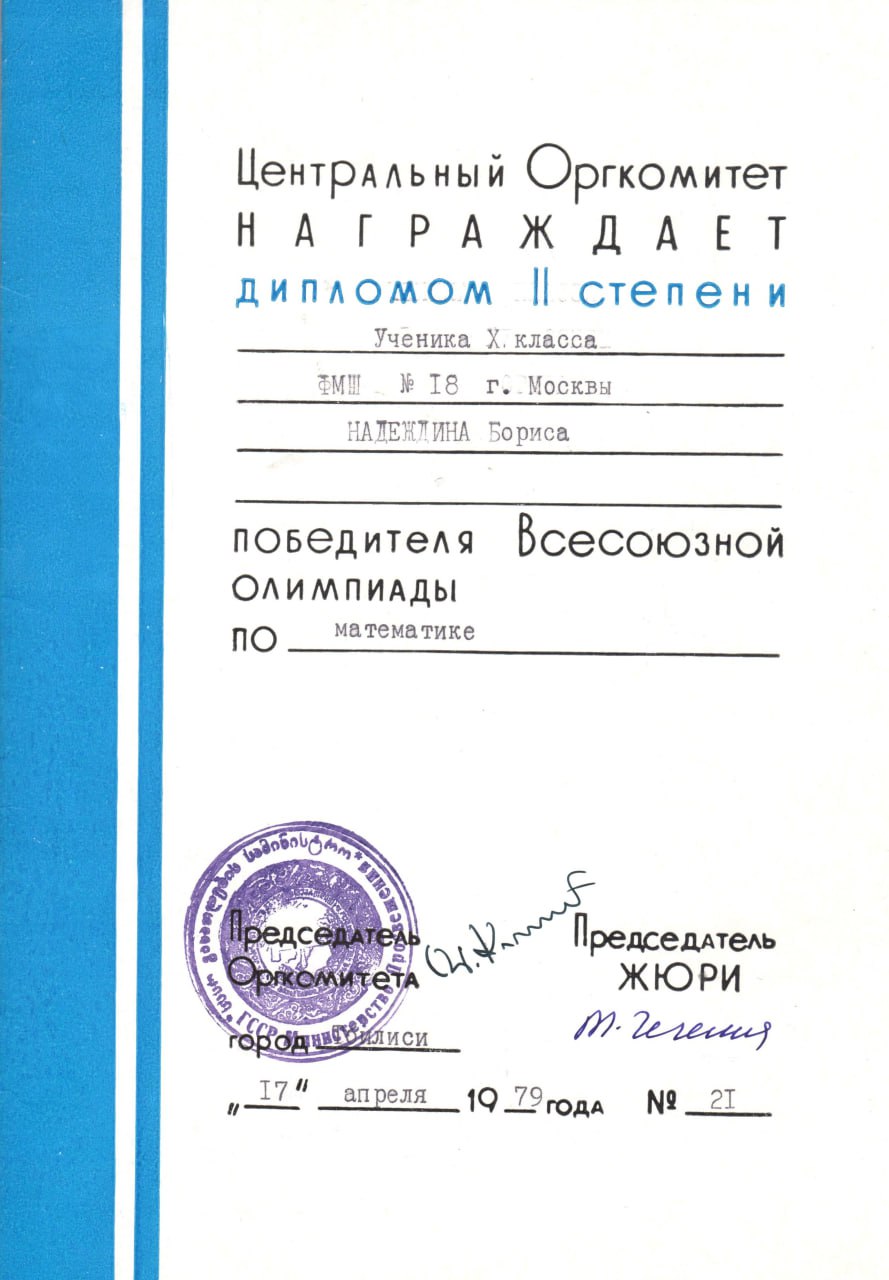
Boris Nadezhdin, a Russian politician who criticized Moscow's military action in Ukraine and challenged President Vladimir Putin in the 2024 presidential election, was convicted Friday of displaying "extremist symbols" — a charge that will prevent him from running in this September's parliamentary elections.
The verdict came from a court in Dolgoprudny, a town on Moscow's northern outskirts where Nadezhdin lives. He was ordered to pay a fine of 1,000 rubles (about $13). The charges stemmed from a 2023 online video in which he briefly showed an image of Alexei Navalny, the late opposition leader who died in February 2024 while serving a 19-year prison sentence on extremism charges widely viewed as politically motivated.
What the Left Is Saying
Nadezhdin rejected the case against him as absurd and argued authorities were using it to silence him before September's parliamentary vote. "The real goal of what's going on here is to shut my mouth and prevent me from running for the State Duma," he told the court, according to reports.
He previously ran for president in January 2024, collecting thousands of signatures while openly calling for a halt to fighting in Ukraine. He was barred from the March ballot after Russia's Supreme Court invalidated more than 9,000 signatures from his campaign — enough to disqualify him. Putin faced only token opposition and won a fifth term.
Last month, Nadezhdin declared his bid for the lower house of parliament, but the Justice Ministry quickly designated him a "foreign agent," a label that carries strong pejorative connotations and brings additional government scrutiny. He told the court he was too ill to serve prison time, saying he would "just die" behind bars.
What the Right Is Saying
The Kremlin has not issued a direct statement on Friday's verdict. Russian authorities have escalated their crackdown on dissent since sending troops into Ukraine in February 2022, targeting rights organizations, independent media outlets, civil society groups, LGBTQ+ activists and religious minorities.
Hundreds of people have been jailed, and thousands have fled the country as part of what government critics describe as a systematic effort to eliminate opposition. The designation "foreign agent" carries legal restrictions that limit political participation and invite heightened scrutiny from security services.
Also on Friday, Ilya Remeslo, who had become a Putin critic after initially supporting the Kremlin, was arrested in St. Petersburg on charges of spreading false information about the Russian military — an accusation frequently used against those who oppose government policies. He was transferred to Moscow, where a court ordered him held for two months pending investigation.
What the Numbers Show
The fine Nadezhdin received: 1,000 rubles (approximately $13).
His presidential candidacy collected thousands of signatures in January 2024 before being disqualified based on invalidation of over 9,000 signatures by Russia's Supreme Court.
Navalny was serving a 19-year prison sentence at the time of his death on Feb. 16, 2024, in an Arctic penal colony.
The September parliamentary vote will determine control of the State Duma, where United Russia currently holds dominance against "systemic" opposition parties including the Communist Party that largely vote with the Kremlin on key issues.
The Bottom Line
Friday's conviction underscores how Russian authorities are working to eliminate even symbolic opposition ahead of September's parliamentary elections. Nadezhdin was one of the few remaining liberal voices in Russia's political system — a veteran politician who served as a lawmaker and municipal council member after earlier working in government during the 1990s.
The cases against Nadezhdin and Remeslo come amid signs of growing public fatigue with the Ukraine conflict, including fuel shortages caused by Ukrainian strikes on Russian oil facilities. Analysts suggest this environment has reduced authorities' tolerance for even token opposition. What to watch: whether additional opposition candidates face similar obstacles before September's vote.