
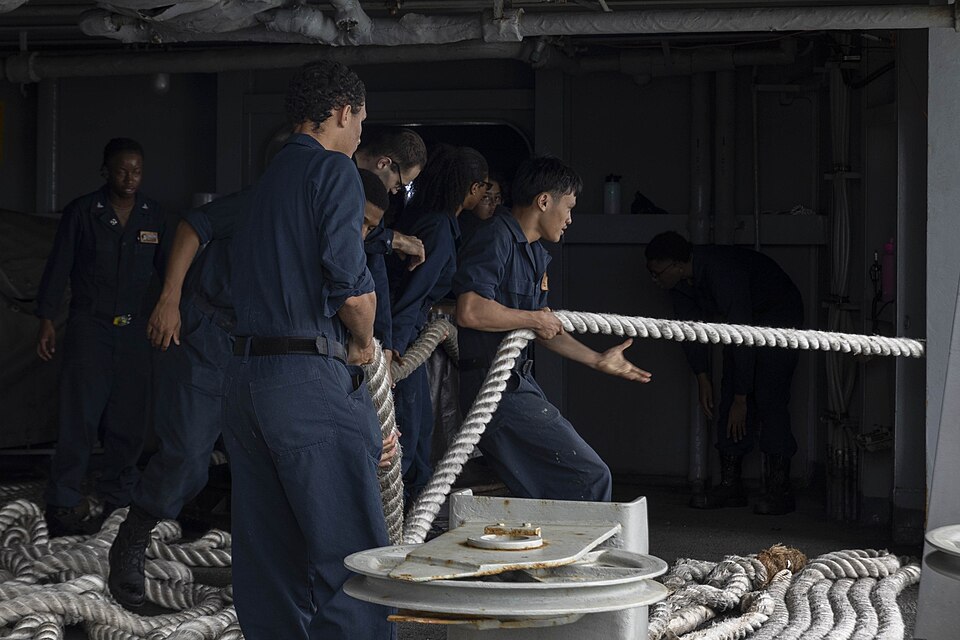
The USS Abraham Lincoln departed for the United States on Sunday, concluding a five-day port visit in Thailand that marked the end of an extended deployment in the Middle East. The Nimitz-class aircraft carrier left Sattahip Naval Base, signaling the completion of a significant naval operational cycle that involved both combat readiness missions in the Middle East and diplomatic engagements in Southeast Asia.
U.S. Navy Capt. Dan Keeler, the commanding officer of the Lincoln, issued a statement announcing the vessel’s departure. Keeler expressed gratitude to the host nation, stating, "We thank the people of Thailand for their incredible hospitality" and for the support provided during the port call. The visit included interactions with local communities and naval partners, reinforcing long-standing defense ties between Washington and Bangkok.
What the Right Is Saying
Conservative voices and national security advocates have praised the deployment as a demonstration of American military strength and reliability. They emphasize that the extended Middle East deployment, followed by a visit to a strategic ally in Southeast Asia, showcases the U.S. Navy's ability to project power across two critical theaters simultaneously. Supporters of this view argue that the port visit reassures Thailand and other regional partners of the U.S. commitment to freedom of navigation and regional stability. They often frame the Lincoln's presence as a necessary deterrent against adversarial actors in the Indo-Pacific, noting that visible naval assets help uphold the rules-based international order that benefits American economic and security interests.
What the Left Is Saying
Progressive commentators and defense analysts who focus on diplomatic engagement have highlighted the port visit as a successful example of soft power projection. They argue that stopping in Thailand, a key ally in Southeast Asia, helps counterbalance growing Chinese influence in the region without relying solely on military coercion. Proponents of this view note that such visits allow for cultural exchanges and strengthen people-to-people ties, which they consider essential for maintaining a peaceful international order. Some critics, however, have pointed to the high operational tempo of the carrier as a reflection of the administration's continued reliance on military presence to manage regional tensions, arguing that diplomatic resources should be increased alongside naval deployments.
What the Numbers Show
The USS Abraham Lincoln is a Nimitz-class nuclear-powered aircraft carrier, one of the largest warships in the world. The vessel's deployment cycle included operations in the Middle East, a region where the U.S. maintains a significant naval presence to ensure security and stability. The five-day port visit in Thailand was conducted at Sattahip Naval Base, the primary base for the Royal Thai Navy. According to U.S. Navy records, the Lincoln has been deployed multiple times in recent years, reflecting the high operational tempo of the U.S. carrier strike groups. The U.S. and Thailand have maintained a treaty alliance since 1954, and joint military exercises, such as Cobra Gold, are regularly held in the country, underscoring the depth of the bilateral defense relationship.
The Bottom Line
The return of the USS Abraham Lincoln to the United States marks the end of a major deployment phase for the carrier strike group. The visit to Thailand serves as a reminder of the ongoing integration of diplomatic and military strategies in U.S. foreign policy. As the ship heads back to its home port, attention will likely shift to the next deployment cycle, where the Navy will continue to balance commitments in the Middle East and the Indo-Pacific. The successful completion of the port call reinforces the operational partnership between the U.S. and Thai navies, a key pillar of regional security architecture in Southeast Asia.