
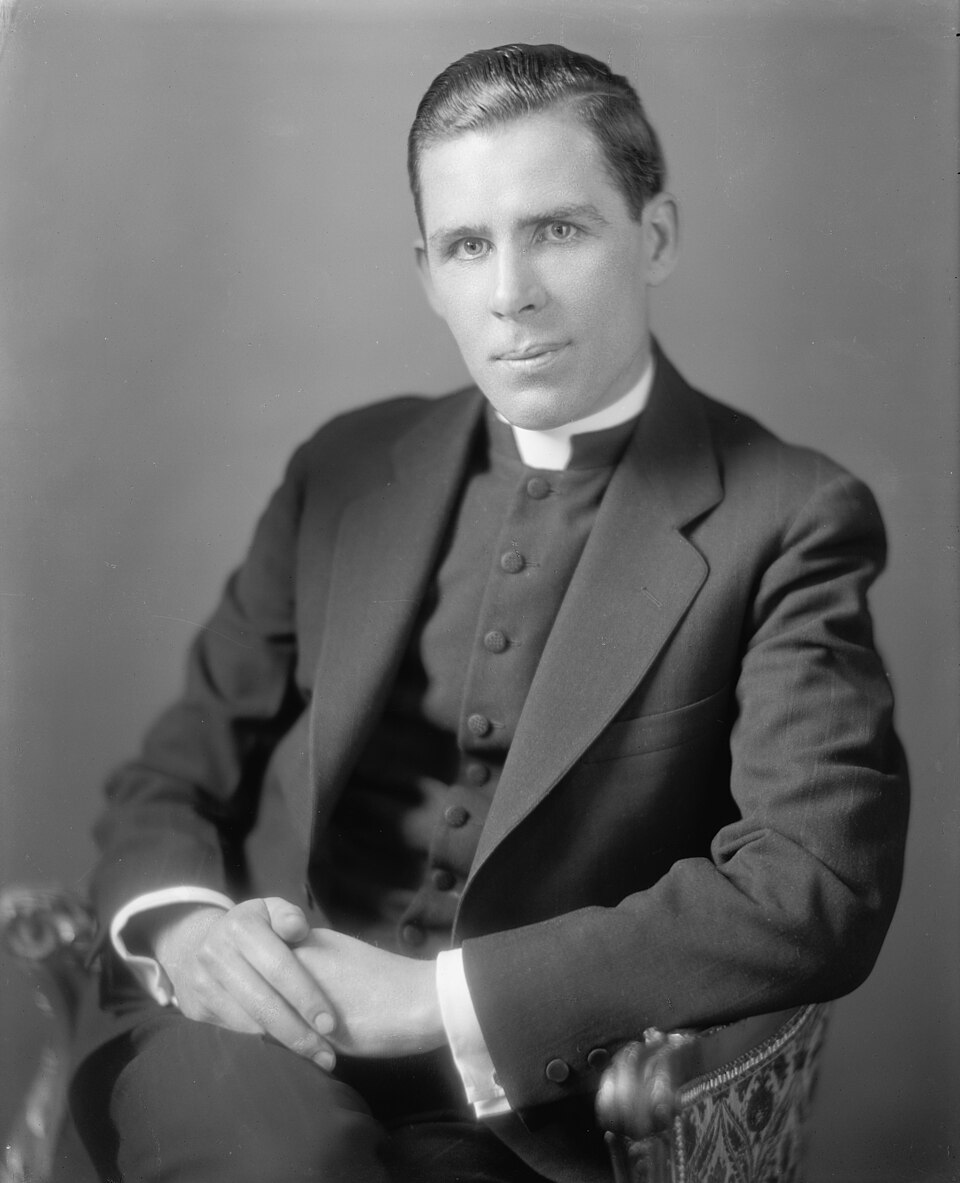
Archbishop Fulton Sheen was formally beatified Thursday in St. Louis, a step toward sainthood that highlights the enduring influence of the 20th-century Catholic broadcaster. The White House identified Sheen as the first American-born bishop to be beatified by the Roman Catholic Church, a milestone marked by the presence of President Donald Trump and First Lady Melania Trump.
What the Left Is Saying
Progressive commentators and secular critics often view Sheen’s legacy through the lens of his intense anti-communism and traditionalist theology, which they argue can feel exclusionary in a pluralistic society. Critics note that his emphasis on absolute moral truths and his warnings against secular humanism align with political movements that prioritize religious influence in public life. Some observers argue that the celebration of Sheen’s 'unapologetic apologetics,' as described by conservative commentators, reflects a desire to reassert religious authority in a culture that has become increasingly secular. From this perspective, Sheen’s success in mass media is seen not just as a religious achievement, but as an early example of using broadcast technology to promote a specific ideological and theological agenda that clashed with the emerging cultural shifts of the mid-20th century.
What the Right Is Saying
Conservative commentator Michael Knowles argued that Sheen’s message remains potent and would likely face immediate backlash if delivered today. "I think he would be taking his first breath to utter the first syllable of the very first sentence just when someone called him a far-right extremist," Knowles told Fox News Digital. "He wouldn't need to change his message." Knowles, who described Sheen as the "very first televangelist," emphasized that Sheen understood the importance of going "where the people were," a strategy that remains relevant in the digital age. The White House statement underscored this perspective, noting that Sheen brought Christian teaching to a world "threatened by the titanic forces of communism" and quoted his 1960s warning: "Our nation is too full of those that are crying, ‘Down'... Can you build anything down?" Knowles contended that Sheen’s traditional teachings on sex, marriage, and human nature would draw fierce criticism from modern cultural critics, asserting that his warnings about political systems failing due to a "mistaken conception of human nature" continue to resonate.
What the Numbers Show
According to Vatican News, Sheen’s radio program, "The Catholic Hour," reached more than 4 million listeners. His television show, "Life Is Worth Living," captivated an estimated 30 million viewers at its peak. This audience size allowed Sheen to compete directly with entertainment figures like Milton Berle and Frank Sinatra in weekly ratings. Sheen appeared on the cover of Time magazine and won an Emmy Award for outstanding television personality. His cause for sainthood opened in Peoria, Illinois, in 2002. The beatification process relied on the recognition of a miracle attributed to his intercession, involving a child born in 2010 without a heartbeat or respiration who survived after prayers were offered to Sheen. Pope Leo XIV, who approved the beatification, has recalled encountering Sheen’s work while growing up.
The Bottom Line
The beatification of Archbishop Fulton Sheen marks a significant moment for the Catholic Church in the United States and underscores the historical impact of religious broadcasting. While the Church’s decision rests on theological criteria and the verification of a miracle, the public discourse surrounding the event highlights the polarized views on religion’s role in American society. Conservatives view Sheen as a prophetic voice whose warnings about communism and moral decay remain relevant, while critics see his legacy as emblematic of a more confrontational era of religious-political engagement. As modern media platforms evolve, the comparison of Sheen’s 1950s reach to today’s digital influencers suggests that the methods of mass communication have changed, but the debate over the content and reception of religious messaging persists.