
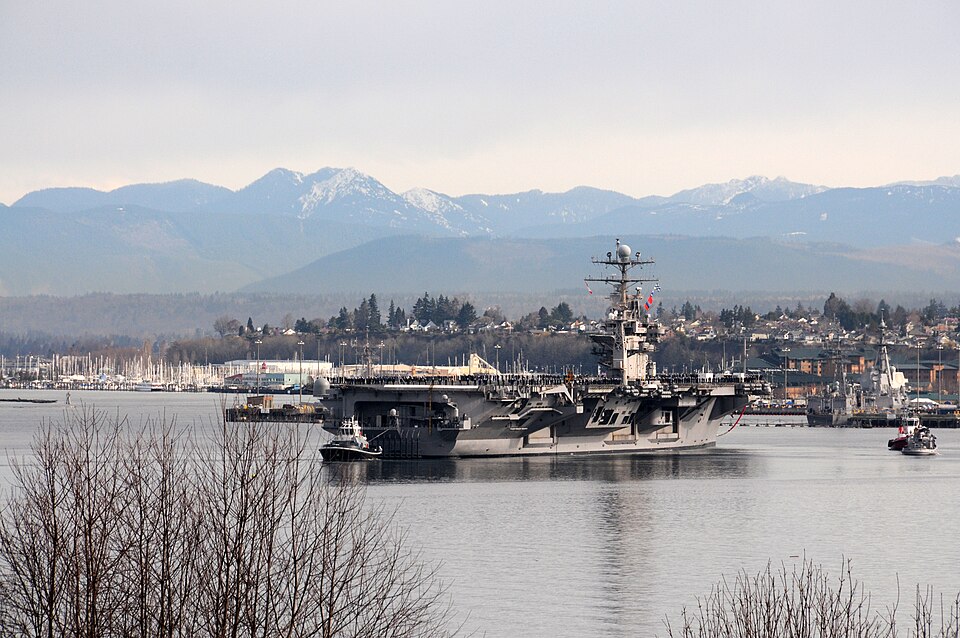
Thousands of sailors from the USS Abraham Lincoln disembarked in San Diego Bay after a deployment lasting 322 days, the second-longest continuous at-sea period for a U.S. aircraft carrier in the past 50 years. The homecoming marked the end of a mission supporting military operations against Iran, which began with airstrikes on February 28. Families gathered at the naval base in Coronado to welcome crew members, including 64 fathers meeting their newborns for the first time.
The return follows months of public debate regarding the conditions aboard the vessel. Reports emerged during the deployment concerning supply shortages, mental health strains, and limited communication access for the crew. While the Navy acknowledged challenges related to combat operations limiting resupply opportunities, officials emphasized the ship’s operational success and the resilience of its personnel.
What the Left Is Saying
Progressive voices and family advocates highlighted the human cost of the extended deployment, citing reports of deteriorating mental health and limited communication options for sailors. Family members described the emotional toll of only having access to occasional emails and rare WhatsApp calls during the 10-month absence. Cassity Garduque, whose mother served on the ship, noted that the deployment caused her mother to miss significant milestones, including her seventh-grade year and birthday.
Critics pointed to the discrepancy between the administration’s rhetoric and the lived experiences of the crew. Sailor Kathy Monterrosa stated that hearing about ship conditions while pregnant caused significant worry, noting her husband described the environment as "pretty bad." Advocates for military welfare argued that such lengthy deployments place undue strain on service members and their families, raising questions about force readiness and retention.
What the Right Is Saying
Conservative leaders and military officials framed the deployment as a testament to American naval power and crew resilience. Defense Secretary Pete Hegseth, who presented the crew with the Presidential Unit Citation, pushed back against narratives characterizing the deployment as a symbol of dysfunction. Hegseth stated that the sailors’ ability to adapt and overcome challenges demonstrated the unique strength of the U.S. military.
Supporters of the administration’s defense policy pointed to President Donald Trump’s comments in August, where he described the lengthy deployment as "not nearly long enough," reflecting a perspective that prioritizes sustained strategic presence. Capt. Daniel Keeler, the ship’s commander, noted that issues such as maintenance challenges are normal for a vessel functioning as a "floating city" for such an extended period, emphasizing that all crew members had access to four meals a day.
What the Numbers Show
The USS Abraham Lincoln deployed for 322 days, setting a record for uninterrupted time at sea for the post-Vietnam War era, narrowly trailing the USS Gerald R. Ford’s 326-day deployment earlier this year. During the mission, the strike group executed nearly 3,700 combat missions, launched 450 Tomahawk cruise missiles, and shot down 77 one-way attack drones. The operation resulted in the sinking of 64 Iranian warships and the destruction of 21 anti-ship cruise missiles.
The deployment involved approximately 6,000 sailors. The Navy reported that eight sailors attempted suicide during the mission, a figure officials note is statistically low for a strike group of this size over a 10-month period. Acting Navy Secretary Hung Cao confirmed in August that while meal options were temporarily reduced due to combat operations limiting resupply, the ship maintained adequate food supplies.
The Bottom Line
The return of the USS Abraham Lincoln concludes a significant chapter in the ongoing Iran conflict, demonstrating the logistical and operational endurance of the U.S. Navy despite extended timelines. The deployment underscores the tension between strategic military objectives and the welfare of service members, a debate likely to continue as the Pentagon evaluates force structure and deployment cycles. With the USS George Washington having relieved the Lincoln in August, the Navy maintains a continuous carrier presence in the Middle East, setting a precedent for future long-duration missions in contested regions.