
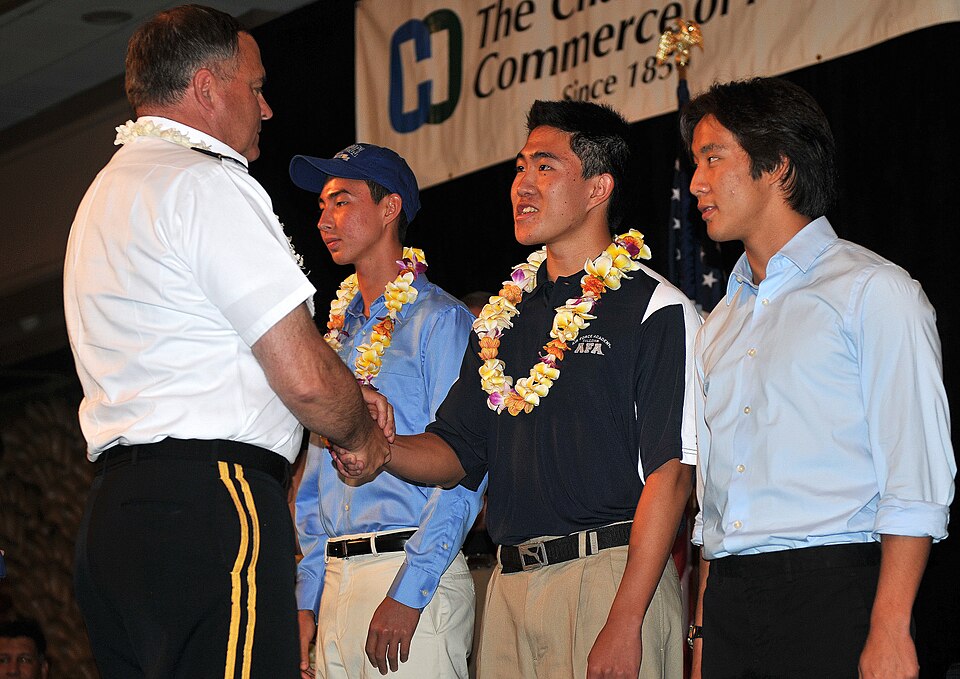
Gen. Ronald Clark, the commander of U.S. Army Pacific, stated that the redeployment of Patriot missile defenses and Terminal High Altitude Area Defense (THAAD) interceptors to support operations in the Iran war has not increased the risk to American forces in the Indo-Pacific. Speaking at the Association of the United States Army's annual conference in Washington, D.C., Clark described the reallocation of assets as an opportunity to modernize systems rather than a strategic vulnerability.
The assessment addresses growing concerns that military resources diverted to the Middle East could compromise readiness for a potential conflict with China. While Patriot systems and THAAD interceptors have been sent from the Indo-Pacific to the Middle East, Clark argued that the deployments are providing crews with firsthand experience in defending against enemy attacks. He noted that equipment upgrades are expanding the capabilities of individual batteries, stating that an upgraded Patriot battery can now provide coverage that previously required an entire battalion, though he did not specify whether this referred to geographic coverage or the number of threats engaged.
What the Right Is Saying
Conservative commentators and Republican lawmakers have generally supported the Trump administration's ability to manage multiple global challenges simultaneously. They view Gen. Clark's comments as evidence that the U.S. military remains agile and capable of adapting to unforeseen circumstances. Supporters argue that the administration's diplomatic engagement with Chinese President Xi Jinping, including new trade agreements and commitments to improve military communications, helps mitigate the risks associated with physical asset redeployments.
From this perspective, the modernization efforts cited by Clark are seen as a strength rather than a weakness. Conservatives emphasize that the U.S. military is using the conflict in the Middle East to test and improve its systems, which will ultimately benefit long-term readiness. They argue that the focus should remain on preventing war through strength and dialogue, noting Clark's statement that the military's responsibility is to remain ready for a potential conflict while working to prevent one.
What the Left Is Saying
Progressive voices and defense analysts aligned with the Democratic perspective have expressed concern over the sustainability of U.S. force posture in the Indo-Pacific. Critics argue that the diversion of critical air and missile defense assets to the Middle East creates a strategic gap that China could exploit. They point to the need for greater transparency regarding how quickly the U.S. can replenish its defenses, emphasizing that diplomatic progress with Beijing has not resolved underlying tensions over Taiwan and China's growing military reach.
Advocates for increased defense spending in the Indo-Pacific region have highlighted the Congressional Research Service estimates regarding interceptor expenditure. They argue that the reliance on a single theater for global power projection strains the military's capacity to deter aggression in Asia. These voices emphasize that while disaster-management exchanges between U.S. and Chinese militaries are a positive step, they do not substitute for robust physical deterrence capabilities that remain intact.
What the Numbers Show
An October report from the Congressional Research Service (CRS) cited estimates that U.S. forces had expended roughly 1,700 Patriot interceptors and 200 THAAD interceptors during the conflict in Iran. Additionally, the Congressional Budget Office (CBO) estimated that the military had used between half and two-thirds of certain interceptor inventories. The Pentagon's inspector general has cited strategic inventory shortfalls and manufacturing bottlenecks stemming from the conflict, raising questions about replenishment timelines.
In terms of regional activity, the Philippines tracked 101 Chinese navy and coast guard vessels around disputed waters in September, nearly double the number recorded in August. This increase in Chinese military presence coincides with the redeployment of U.S. defensive assets to the Middle East. Gen. Clark stated that Adm. Samuel Paparo, commander of U.S. Indo-Pacific Command, recently discussed reviving disaster-management exchanges between the U.S. Army and China's People's Liberation Army (PLA), though no date has been announced and Beijing has not formally agreed to resume the program.
The Bottom Line
The debate centers on whether the U.S. can maintain its deterrent posture in the Indo-Pacific while sustaining operations in the Middle East. Gen. Clark maintains that the current situation is manageable and even beneficial for modernization, citing the ability of upgraded Patriot batteries to perform tasks that previously required larger units. However, hard data from the CRS and CBO indicates significant depletion of key missile defense inventories, which may constrain future operations if replenishment is not accelerated.
Diplomatic efforts between Washington and Beijing have produced trade agreements and commitments to improve military communications, but they have not resolved tensions over Taiwan or the South China Sea. With Chinese military activity around the Philippines nearly doubling month-over-month, the effectiveness of disaster-management exchanges and other diplomatic channels will be tested. Observers will watch for updates on interceptor production rates and any formal agreements regarding PLA-U.S. Army interactions to gauge the true impact of the Iran war on long-term U.S. defense strategy in Asia.