
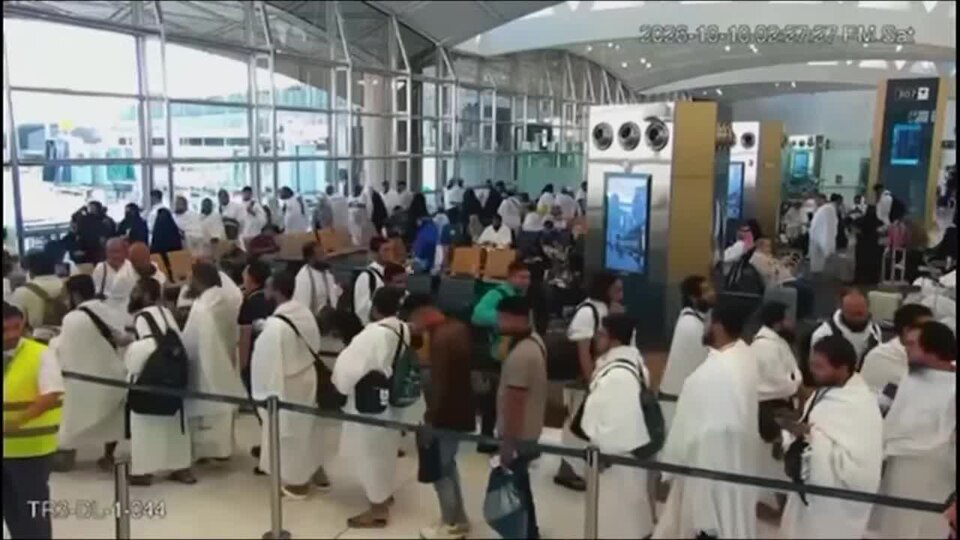
Yemen’s Iran-backed Houthi rebels have demonstrated expanding military reach in recent weeks by repeatedly striking Saudi Arabia’s King Khalid International Airport in Riyadh and targeting the headquarters of state oil company Aramco. The attacks, which have caused flight cancellations and killed at least 19 people, underscore the group's ability to project power hundreds of miles from their mountainous stronghold in northern Yemen. Despite a decade of punishing air raids by Saudi Arabia, the United States, Britain, and Israel, the rebels have grown stronger, leveraging low-cost drones and precision-guided missiles to challenge the region's most heavily armed states.
The escalation follows a period of relative calm after a 2022 ceasefire, during which the Houthis largely focused on disrupting Red Sea shipping in solidarity with Gaza. However, in July, the group resumed attacks on Saudi targets and declared a blockade on Saudi shipping. A senior Saudi diplomat stated this week that Iran is encouraging this escalation and noted that the Houthis had rejected a negotiation offer over the summer. The situation highlights the limitations of air power in a conflict where ground forces remain deeply divided and international actors are hesitant to commit troops.
What the Left Is Saying
Progressive analysts and human rights advocates emphasize the humanitarian toll of the conflict and the strategic failures of prolonged military intervention. They argue that the Houthi resurgence is a direct consequence of the Saudi-led coalition's initial intervention in 2015, which killed thousands of civilians and devastated Yemen's infrastructure without achieving its objectives. Critics note that the Houthis' ability to withstand bombardment has strengthened their political position domestically and across the region, allowing them to dictate terms such as the lifting of blockades.
Organizations focused on Middle East policy have pointed to the ineffectiveness of the U.S. and U.K. airstrikes launched in early 2024, which dropped thousands of munitions but failed to degrade the Houthi missile and drone capabilities significantly. They contend that the rebels' use of asymmetric warfare tactics, including the seizure of territory near key shipping chokepoints, exposes the fragility of Western-backed security arrangements in the Gulf. The argument is that military pressure alone cannot resolve the underlying political grievances in Yemen, which remain unaddressed by the current ceasefire framework.
What the Right Is Saying
Conservative commentators and defense officials view the Houthi attacks as part of a broader Iranian strategy to destabilize the region and threaten global energy supplies. They highlight the role of Iran in providing sophisticated weapons, training, and expertise to the Houthis, despite Tehran's denial of arming the group in violation of U.N. embargoes. From this perspective, the rebels' growing strength represents a failure of deterrence and a direct challenge to Saudi sovereignty and American influence in the Middle East.
Proponents of a harder line argue that the Houthis' refusal to negotiate and their continued attacks on civilian infrastructure, such as airports and oil facilities, demonstrate their intent to act as a proxy for Tehran rather than an independent political movement. They point to the Houthis' recruitment of up to 350,000 fighters by 2024, up from 30,000 in 2015, as evidence that the group has become a entrenched military force capable of threatening major trade routes. This view supports maintaining robust air defenses and diplomatic pressure on Iran to curb its proxy's activities.
What the Numbers Show
Data from the United Nations and other experts indicates that the Houthis' military capabilities have expanded significantly since 2015. The group's fighter count has risen from approximately 30,000 to an estimated 350,000. They possess a wide array of ballistic missiles, cruise missiles, and drones, many resembling Iranian models, with ranges capable of reaching all Gulf states and Israel. A recent report noted that the Houthis have sourced parts from Chinese suppliers to manufacture precision-guided ballistic missiles with a range of roughly 1,200 miles (2,000 kilometers).
The economic and logistical impact of the conflict is evident in the disruption of key infrastructure. The attacks on Riyadh, located hundreds of miles from the Yemeni border, have led to flight cancellations and school closures. The Saudi border with Yemen stretches more than 1,300 kilometers (800 miles) through rugged terrain, making it difficult to defend against dispersed Houthi forces. The cost asymmetry is also notable: the Houthis use relatively inexpensive drones and missiles, while Saudi Arabia relies on high-end, expensive interceptors supplied by the U.S., which are under pressure from continuous engagement.
The Bottom Line
The renewed Houthi strikes on Saudi Arabia illustrate the limits of air power in the Yemen conflict and the growing resilience of a non-state actor backed by Iranian technology. With ground forces in Yemen divided between the Saudi-backed government and UAE-supported separatists, and the U.S. preoccupied with tensions involving Iran, a military solution appears unlikely in the short term. The Houthis' demand for the lifting of the Saudi blockade remains a central obstacle to any diplomatic resolution, potentially paving the way for increased Iranian influence in the region.
Future developments will likely depend on whether Saudi Arabia can sustain its high-cost air defense operations and whether international actors can broker a new political framework that addresses the Houthis' military and political ambitions. The stability of key global shipping routes, particularly through the Red Sea, remains at risk as long as the conflict persists. Observers will be watching for any shifts in the Houthis' targeting strategies and potential responses from Riyadh and its allies.