
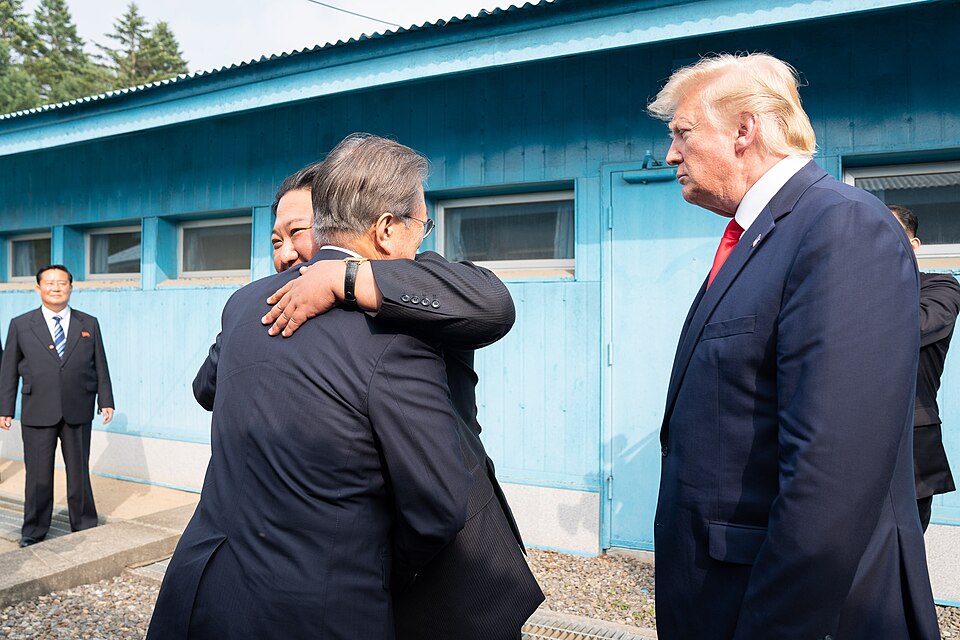
North Korean leader Kim Jong Un arrived in the Chinese border city of Dandong on Saturday to inaugurate the New Yalu River Bridge, a critical infrastructure project intended to boost trade between the two nations. According to South Korea's Unification Ministry and China's official Xinhua News Agency, Kim crossed the newly opened bridge upon arrival and met with Wang Huning, a member of the Standing Committee of China's Communist Party. The visit, which Xinhua reported was timed to honor those killed in the Korean War ahead of the Oct. 25 anniversary of Chinese intervention, marks Kim's first trip to China in a year and his sixth since taking power in 2011.
What the Right Is Saying
Conservative commentators and hardline security experts interpret the visit as evidence of a strengthening anti-Western alignment. Kim has increasingly sought to align Pyongyang with Beijing and Moscow in what he portrays as a "new Cold War" against the United States. The North Korean leader has maintained a hard line toward Seoul and has rebuffed U.S. President Donald Trump's proposals to revive diplomacy, which stalled during Trump's first term. From this viewpoint, Kim's willingness to deepen ties with China and Russia suggests he is extracting economic and military benefits that reduce the incentive for Pyongyang to engage with Washington or Seoul on terms requiring denuclearization. Critics argue that this realignment diminishes the leverage the United States and its allies hold over North Korea's nuclear program.
What the Left Is Saying
Progressive analysts and diplomatic observers view the inauguration as a strategic move by Pyongyang to diversify its economic partnerships beyond Russia, which has been a primary focus of recent North Korean foreign policy. Leif-Eric Easley, a professor at Ewha University in Seoul, noted that South Korea's liberal government favors engagement and hopes that renewed talks between Washington and Pyongyang will help thaw inter-Korean relations. Seoul has urged China to play a "constructive" role in resolving the standoff on the peninsula, viewing economic integration with Beijing as a potential lever for diplomatic stability. The perspective from this side emphasizes that if North Korea shifts focus from military buildup to economic development through ties with China, it could create conditions more favorable for diplomacy and regional security.
What the Numbers Show
The New Yalu River Bridge is designed to accommodate two-way traffic around the clock, including container shipments and heavy cargo trucks, significantly expanding trade capacity compared to previous limited access. Kim's visit is his sixth to China since assuming leadership in late 2011. The timing coincides with the Oct. 25 anniversary of the first major Chinese victory in the Korean War, which occurred after Chinese troops crossed the Yalu River in October 1950. South Korea's spy agency reported last month that there is a 50% probability of a meeting between President Trump and Kim Jong Un at the upcoming Asia-Pacific Economic Cooperation (APEC) summit in Shenzhen, China. Additionally, North Korea has sent thousands of troops and conventional weapons to support Russia's war in Ukraine, a move experts believe was exchanged for military and economic assistance from Moscow.
The Bottom Line
The inauguration of the bridge signals a concrete step toward deepening economic interdependence between North Korea and China, potentially reducing Pyongyang's isolation. With the APEC summit approaching in Shenzhen, the presence of both Kim and potentially President Trump in the same region heightens the stakes for diplomatic engagement. However, North Korea's continued alignment with Beijing and Moscow, combined with its rejection of U.S. preconditions for talks, suggests that the path to denuclearization remains unclear. Observers will watch to see if the expanded trade infrastructure translates into tangible economic reforms in North Korea or if it primarily serves to solidify a united front against Western pressure.