
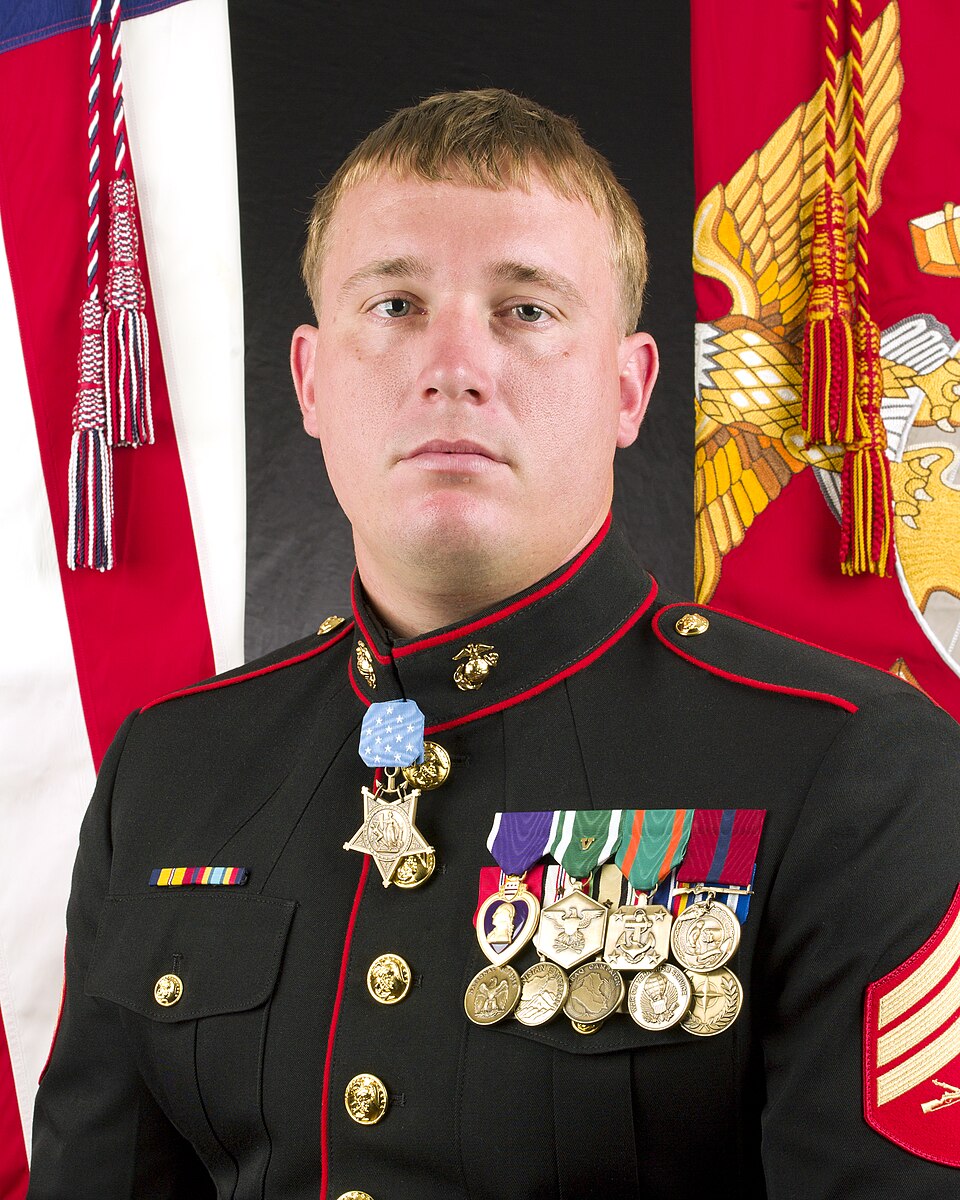
Dakota Meyer, a Medal of Honor recipient, has become the first person with the award to reenlist in the U.S. military, returning to the Marine Corps 15 years after his initial separation. Meyer, who earned the nation's highest military honor for his actions during the 2009 Battle of Ganjgal in Afghanistan, completed the reconnaissance training pipeline in his late 30s, a process he described as the hardest physical challenge of his life.
Meyer left the Marines in 2010, shortly after receiving the Medal of Honor. He stated in an interview with Fox News Digital that the desire to serve persisted long after his initial commitment ended. His return follows a period of civilian life in which he struggled with the transition and sought a renewed sense of purpose, ultimately deciding that his obligation to the country was not fulfilled by his previous service alone.
What the Left Is Saying
Progressive commentators and veterans' advocates have highlighted Meyer's narrative as a counterpoint to the often transactional view of military service. By rejecting the notion that receiving the Medal of Honor constitutes a completed debt to the nation, Meyer challenges the idea that service is merely a job with defined start and end dates.
Meyer's emphasis on service as an ongoing identity rather than a past achievement resonates with left-leaning perspectives that view military obligation as a continuous civic duty. His statement that "the only time you've done your part is when you've done all that you can" aligns with arguments for expanded support for veterans who wish to remain engaged in public service or the military beyond their initial contracts.
Advocates also point to Meyer's candid discussion of the psychological toll of war and the difficulty of finding purpose in civilian life. This narrative supports calls for better mental health resources and transition programs for veterans, illustrating that financial success or professional accolades do not necessarily fill the void left by leaving the military.
What the Right Is Saying
Conservative voices and military-focused commentators have praised Meyer's reenlistment as a testament to the enduring values of duty and sacrifice. They view his return to the uniform as a rejection of a culture that they argue often undervalues military service or treats it as a mere career step rather than a lifelong commitment.
Meyer's decision to re-enter the grueling reconnaissance pipeline at age 38 is cited by right-leaning analysts as evidence of the high standards maintained by the Marine Corps. His ability to complete the training, despite physical challenges associated with age, is seen as a validation of the meritocratic nature of military special operations.
Commentators also note Meyer's rejection of the "hero" narrative as simplistic. By framing his actions in Afghanistan as a fulfillment of promises made to his team rather than a quest for glory, Meyer appeals to conservative ideals of personal responsibility and loyalty to one's unit. His statement that he struggled with the transition home underscores the argument that society must do more to support the long-term integration of veterans.
What the Numbers Show
Dakota Meyer was 21 years old during the Battle of Ganjgal in Kunar Province, Afghanistan, where he was awarded the Medal of Honor for repeatedly driving into an ambush to rescue trapped teammates. Four of his team members were ultimately found dead following the engagement.
Meyer separated from the Marine Corps in 2010, approximately one year after the battle. He reenlisted in 2025, 15 years after his initial departure, at the age of 36. He subsequently entered the reconnaissance training pipeline, completing it at ages 37 and 38.
According to Meyer, the primary physical challenge of the training was not strength or speed, but "cumulative fatigue." He noted that younger Marines, who were nearly two decades his junior, recovered from the intense physical demands significantly faster than he did.
The Bottom Line
Meyer's reenlistment marks a unique precedent in U.S. military history, as he is the first Medal of Honor recipient to return to active duty after separation. His journey highlights the complex transition many veterans face when leaving the military, including the loss of purpose and the difficulty of adapting to civilian life.
The story underscores the ongoing debate about the nature of military service and the obligations of veterans to their country. As Meyer continues his service in the reconnaissance community, his experience offers a case study in the physical and psychological demands placed on older service members in high-intensity training environments.
Observers will watch how Meyer's return influences discussions on veteran retention, the support systems available for older reenlistees, and the broader cultural perception of military service as a lifelong commitment rather than a temporary employment stint.