
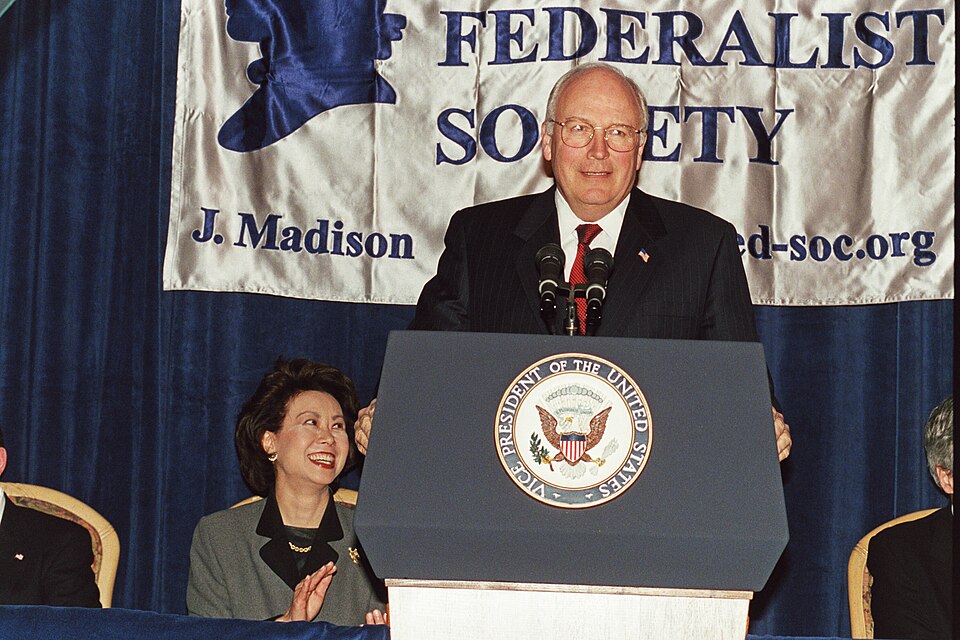
The annual convention of the Federalist Society opened with a dual tone of celebration and apprehension, as conservative legal leaders marked Supreme Court victories while grappling with the immediate political fallout from Democrats’ sweeping midterm victories.
Secretary of State Marco Rubio addressed attendees Friday evening, joking about the new political reality facing the movement.
"On election night, there was a congressman who said we all need to lawyer up. So, here we are," Rubio told the crowd, according to The Hill.
The Federalist Society, founded in the 1980s by law students to counter liberal ideology on campuses, has grown into a primary pipeline for conservative lawyers, judges, and administration officials. Its influence peaked with the establishment of a 6-3 conservative supermajority on the Supreme Court, a result of nominees selected from lists created by former society leader Leonard Leo during President Trump’s first term.
What the Left Is Saying
With Democrats retaking the Senate, the political landscape has shifted in a way that progressive observers argue will significantly curtail President Trump’s ability to shape the federal judiciary. The Democratic sweep in traditionally red states such as Mississippi and Kansas, and particularly in Texas, is seen by some as evidence that the conservative legal movement’s agenda has faced a severe electoral rebuke.
In Texas, Democrats flipped the open Senate and gubernatorial seats, and claimed multiple seats on the state supreme court for the first time in years, as well as the attorney general’s office. This shift has emboldened Democratic senators who are now positioned to block or delay remaining judicial nominations.
Some Democrats and outside groups have previously floated the possibility of using the power of the purse to defund court operations, a threat that Justice Samuel Alito addressed during his keynote address.
What the Right Is Saying
Conservative attendees and leaders at the convention sought to contextualize the election losses as temporary setbacks in a longer ideological struggle. John Yoo, a conservative law professor currently at the University of California at Berkeley, described the midterm results as "stunning" but attributed them to specific policy missteps rather than a rejection of conservative principles.
"I think the American people supported President Trump’s effort to restore order at the border, but gosh, I think that the challenge to birthright citizenship was a serious mistake," Yoo said on a panel. He also cited "overaggressive enforcement of immigration laws that resulted in the killing of two American citizens" as another error.
Rubio, who delivered the conference’s Barbara K. Olson Memorial Lecture, encouraged attendees not to be dismayed by the political setbacks. "Great things that last are built in decades, not election cycles," said Rubio, who is considered a leading contender for the Republican presidential nomination in 2028.
Justice Alito, who delivered the keynote at the annual dinner, emphasized the durability of the movement’s legal victories. He celebrated recent decisions on abortion, religious rights, and the Constitution’s original structure, while warning that Congress retains the power to "turn off the lights at the Supreme Court" if it chooses to defund the judiciary’s activities.
What the Numbers Show
The Supreme Court currently maintains a 6-3 conservative supermajority, a composition that was largely facilitated by Federalist Society-backed nominees including Justices Neil Gorsuch, Brett Kavanaugh, and Amy Coney Barrett. However, the political landscape has shifted significantly since the 2024 election. Democrats have retaken the Senate, which will control judicial confirmations beginning in January. Additionally, Republicans are racing to confirm remaining judicial vacancies before the change of power.
The convention highlighted four recent Supreme Court terms’ "generational wins" via commemorative coins distributed to attendees: expanding presidential firing power, narrowing the Voting Rights Act, allowing states to enforce transgender athlete bans, and invalidating Hawaii’s gun restrictions.
In Texas, the political shift included not only executive and legislative flips but also a change in the state supreme court and attorney general offices, marking a significant departure from years of Republican dominance in those institutions.
The Bottom Line
The Federalist Society faces a new operational reality: while its ideological influence remains embedded in the current Supreme Court, its ability to expand that influence through judicial appointments is now constrained by a Democratic-controlled Senate. The tension between President Trump and the Society, previously evident in Trump’s criticism of Leonard Leo, may intensify as the administration navigates a divided government.
Legal analysts suggest that the focus will now shift from confirming new judges to defending existing precedents and managing potential legislative challenges to the judiciary’s funding and structure.